
The dream of lifting the Women's Africa Cup of Nations trophy may have slipped away, but Morocco's semifinal against Cameroon was ultimately a story of control, patience, and a battle decided by the finest margins.
The Atlas Lionesses dominated possession and territory for long periods, limiting Cameroon's attacking threat and forcing the Indomitable Lionesses to defend deep. Yet after 120 goalless minutes, the semifinal moved to the lottery of penalties.
A Defense That Stood Tall
Morocco's defensive line delivered a composed performance throughout regular and extra time.
The defenders remained organized, dealt effectively with Cameroon's limited counterattacking opportunities, and contributed to the team's buildup from the back.
On the right flank, Hanane Ait El Haj provided an important attacking outlet, delivering dangerous crosses and helping Morocco maintain pressure from wide areas.
Midfield Control Without the Final Pass
The Atlas Lionesses enjoyed significant control in midfield.
Their ability to recover possession, circulate the ball, and dictate the rhythm prevented Cameroon from developing sustained attacking momentum.
The challenge came when Morocco attempted to transform that possession into decisive opportunities. At times, the circulation became too predictable, allowing Cameroon's compact defensive block to remain intact.
The Final Third Remained the Great Challenge
Morocco's attacking players continued to search for solutions.
Sakina Ouzraoui Diki and Sanaa Mssoudy offered movement, direct running, and attempts to break through the defensive structure, while Morocco also looked toward shots from distance and combinations through the center.
But the decisive touch remained elusive.
The Atlas Lionesses created moments around the penalty area without finding the finishing action needed to turn their territorial dominance into a goal.
The Penalty Moment
The biggest opportunity arrived from the penalty spot.
Converting that chance could have changed the entire complexion of the semifinal, but Morocco ultimately remained locked at 0-0 and was forced into extra time.
When neither side could find a breakthrough across 120 minutes, the contest was decided by penalties.
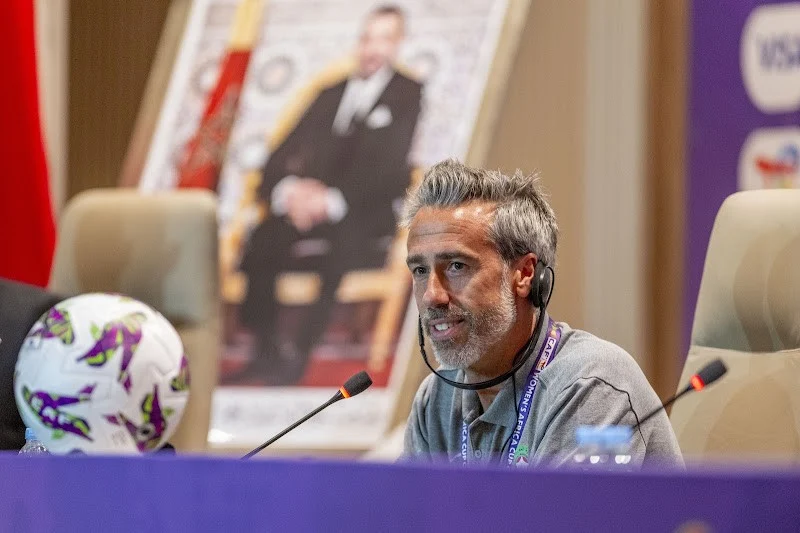
Vilda's Tactical Approach
Jorge Vilda deserves credit for preparing his team to control the match and restrict one of Cameroon's biggest strengths: their ability to attack quickly in transition.
His substitutions also brought fresh energy as Morocco continued searching for the breakthrough during the second half and extra time.
The key challenge, however, was finding a different attacking formula once Cameroon's defensive block became increasingly difficult to penetrate.
Breaking down such a compact structure requires not only possession but constant variation, quicker combinations, changes of rhythm, movement between the lines, and moments of individual creativity.
A Painful Lesson for the Future
There is no single moment that defines Morocco's semifinal.
Instead, the match offered a valuable lesson about the demands of knockout football. Controlling a game is important, but the finest margins ultimately separate possession from victory.
The Atlas Lionesses fought for 120 minutes, maintained their structure, and kept Cameroon under pressure throughout a demanding semifinal.
The dream may have paused in the cruelest way possible, but the experience will only add another layer to Morocco's growing football story. Sometimes history is built not only through trophies, but through the resilience shown on the nights when victory remains just out of reach.