
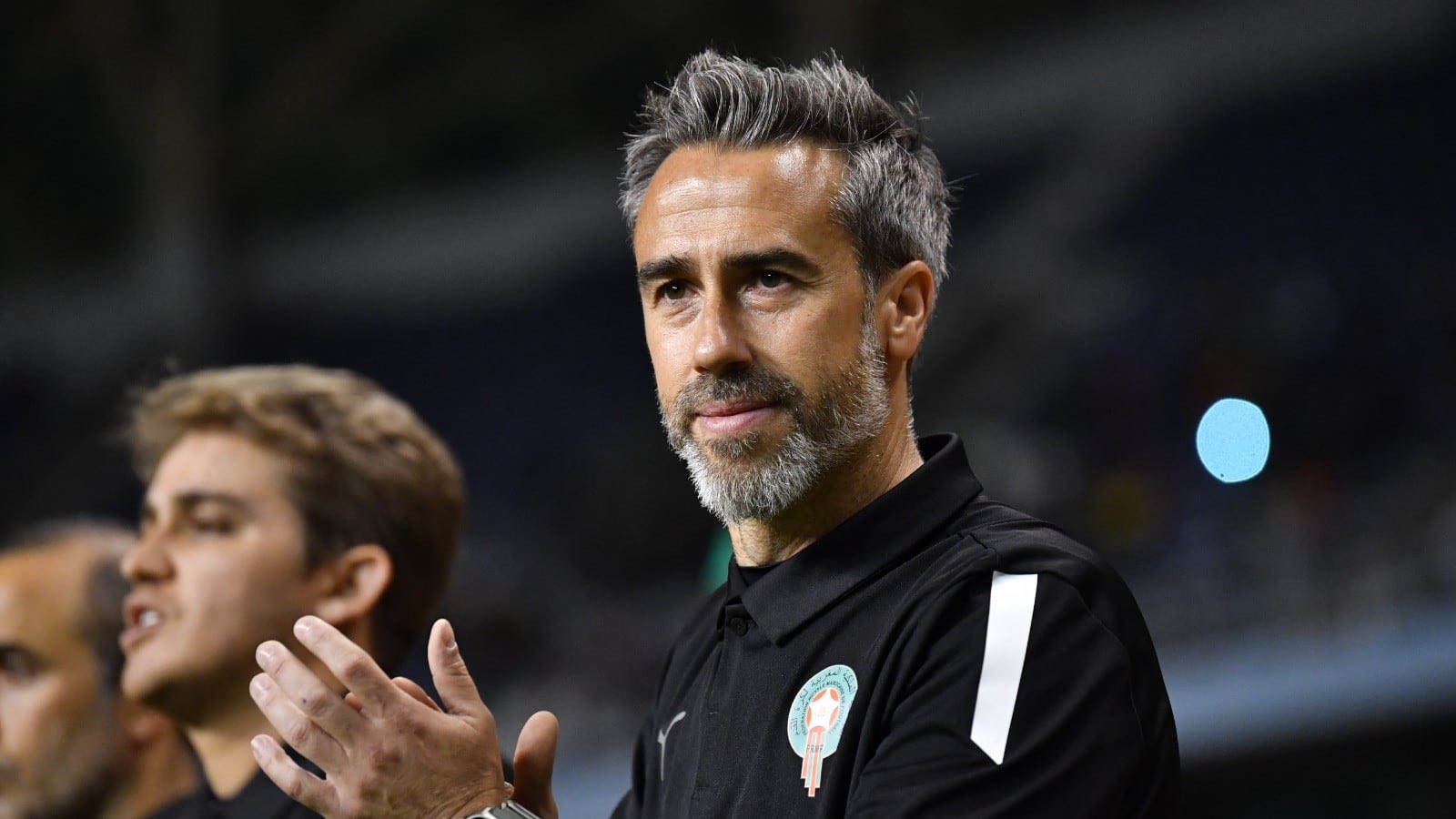
When the Royal Moroccan Football Federation appointed Jorge Vilda in October 2023, the decision immediately carried enormous expectations.
The Spanish coach arrived in Morocco just weeks after leading Spain to the 2023 FIFA Women's World Cup title, bringing with him a reputation built through years of success with Spain's youth national teams.
The mission appeared clear: use that experience to help the Atlas Lionesses transform their growing continental presence into silverware.
But nearly three years later, Vilda's record deserves a closer look.
Pedros Built the Foundation
Vilda did not inherit a team starting from scratch.
Before his arrival, Reynald Pedros had already guided Morocco to the 2022 Women's Africa Cup of Nations final and then to the 2023 FIFA Women's World Cup, where the Atlas Lionesses made history by becoming the first Arab women's national team to reach the knockout stage.
Morocco had already established itself among Africa's leading women's football nations.
The challenge for Vilda was therefore different: build on that foundation and deliver the breakthrough title.
The Trophy That Has Remained Out of Reach
The results have shown that Vilda can keep Morocco competing at the highest level.
At the 2024 WAFCON, played in Morocco in 2025, the Atlas Lionesses reached the final for the second consecutive edition before suffering a dramatic 3-2 defeat to Nigeria after leading by two goals.
At WAFCON 2026, Morocco reached the semifinals again, before being eliminated by Cameroon on penalties and subsequently finishing fourth after another penalty shootout against Algeria.
The pattern is striking.
Morocco has remained among Africa's best, but the continental trophy has continued to slip away.
A Strong Spanish Résumé
There is little doubt about Vilda's credentials.
His success with Spain went far beyond the senior national team. He spent years working within the country's youth system, winning European and international titles before reaching the highest point by becoming a world champion with the senior team.
That background was a major reason behind his appointment in Morocco.
Yet the central question is whether that experience has produced the same transformative impact with the Atlas Lionesses.
The Next Generation Question
One of the most important challenges concerns the transition from Morocco's successful youth teams into the senior side.
The country has produced talented generations at Under-17 and Under-20 level, with several players gaining experience at FIFA youth World Cups.
However, the pathway from those teams to the senior national side has not always appeared as seamless as expected.
This cannot be placed entirely on Vilda. The development of young players is a wider responsibility involving the national technical administration, clubs and youth national teams.
But the senior coach remains an important part of that bridge, particularly given Vilda's own experience within Spain's renowned youth development structure.
The Olympic Opportunity That Slipped Away
Another important chapter came during the qualification campaign for the Paris 2024 Olympics.
Morocco defeated Zambia 2-1 in the first leg but saw its hopes disappear after a 2-0 defeat in the return match.
The result meant the Atlas Lionesses missed an opportunity to reach the Olympics at a time when Moroccan women's football was enjoying unprecedented momentum following the 2023 World Cup.
Again, one result cannot define an entire coaching tenure.
But when combined with the continued absence of a major trophy, it naturally becomes part of the wider evaluation.
A Big Contract, Big Expectations
Vilda's appointment also came with significant expectations surrounding his contract and reported salary.
Media reports have placed his annual salary in Morocco at around €200,000, compared with approximately €170,000 during his time as Spain's head coach.
Those figures should be treated as reported media estimates rather than official federation disclosures.
The issue is not whether a successful coach deserves a strong salary. The real question is whether the sporting return matches the expectations attached to such an appointment.
For Morocco, simply reaching the latter stages is no longer enough to define success.
The Atlas Lionesses had already reached a WAFCON final and a World Cup knockout stage before Vilda arrived.
The Bigger Picture Goes Beyond One Coach
It would be too simplistic to place every challenge facing Moroccan women's football on Vilda.
Morocco has invested heavily in the women's game, hosted three consecutive editions of the Women's Africa Cup of Nations, strengthened its youth structures and established itself as a regular presence at major international tournaments.
The next challenge is creating a sustainable footballing pathway capable of producing success over the next five or ten years, not simply preparing for the next tournament.
That responsibility extends across the entire footballing system.
So, Has Vilda Failed?
The answer is more complicated than a simple yes or no.
Vilda has kept Morocco among Africa's elite, guided the team deep into the continental tournament and helped maintain its international relevance.
He has also been part of a period in which Morocco secured another World Cup qualification and continued competing against the continent's strongest nations.
Calling the entire tenure a failure would therefore be unfair.
But calling it a complete success would also overlook the biggest objective that remained unfulfilled.
The Atlas Lionesses still do not have the Women's Africa Cup of Nations trophy.
The Final Question
The real issue is not whether Jorge Vilda is a great coach.
His record with Spain already provides a powerful answer.
The question is whether he is the right coach for the next stage of Morocco's journey.
Morocco no longer needs simply to become a contender. That transformation has already happened.
The next step is to turn finalists into champions, develop the next generation alongside the established stars, and build a team capable of carrying Moroccan women's football into its next golden era.
Vilda has helped keep the Atlas Lionesses at the summit of African football. Now comes the question that will ultimately define his legacy in Morocco: can he take them from the podium to the top step?