
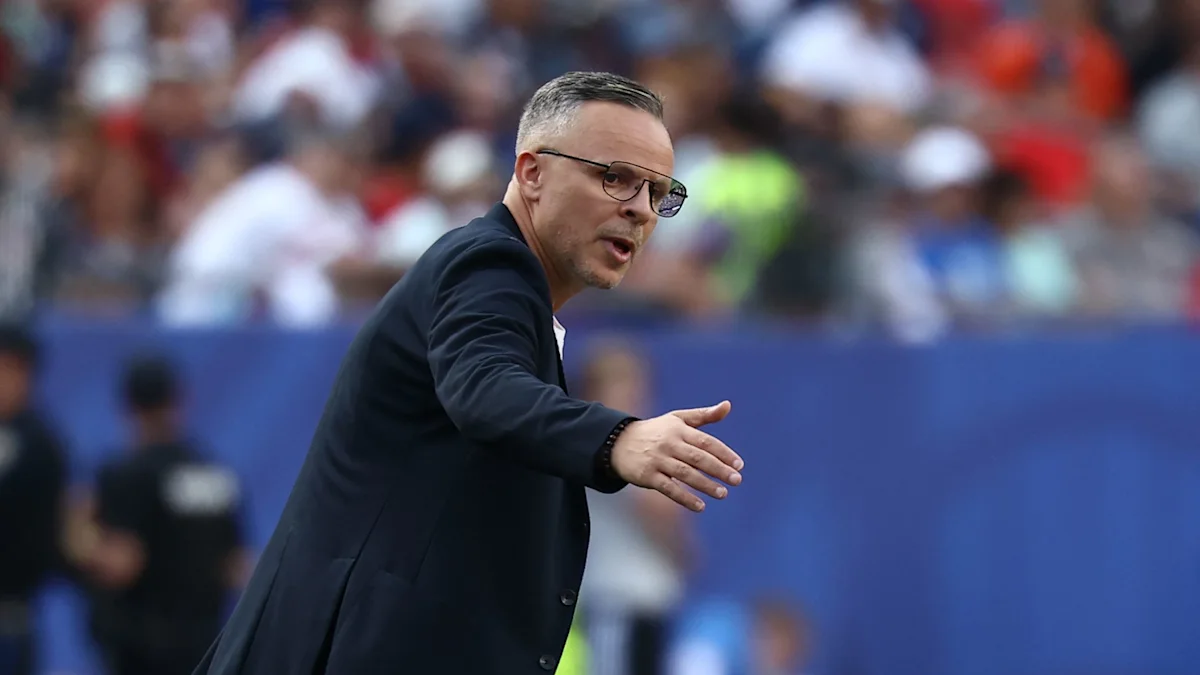
Mohamed Ouahbi's latest Morocco squad has sparked considerable discussion among supporters, with several unexpected selections and new faces highlighting the challenges facing the national-team coach ahead of the November double-header against Niger.
The absence of influential players such as Azzedine Ounahi, Ismaël Saibari and Soufiane Rahimi represents a significant setback for the Atlas Lions. These players bring creativity, attacking movement and the ability to break down compact defensive systems, qualities that Morocco will need to replace during the upcoming fixtures.
Their absence forces Ouahbi to consider alternative solutions, whether by introducing players with similar profiles or adjusting the team's tactical approach.
Finding Solutions Without Key Attacking Players
Niger could approach the upcoming matches with a compact defensive structure, limiting available spaces and making it difficult for Morocco to create clear opportunities.
Against such opposition, having a reliable centre-forward capable of converting half-chances inside the penalty area could prove decisive.
With established attacking options unavailable, Youssef En-Nesyri's return stands out as one of the most notable decisions in the squad. His experience, physical presence and ability to operate inside the penalty area could provide Morocco with an important alternative.
The selection also includes emerging attacking talents Yassir Zabiri and Gessime Yassine, two players who will be eager to demonstrate their qualities and establish themselves within the national team.
For both youngsters, the November gathering represents more than simply an opportunity to train alongside established internationals. It is a chance to show that they can contribute when Morocco need fresh attacking solutions.
New Faces Need More Than a Place on the Bench
Introducing young players into the national team is an important step, but their development also depends on the opportunities they receive.
Ouahbi faces the challenge of balancing continuity with experimentation. While maintaining a competitive starting eleven remains essential, the absence of several key players creates an opportunity to evaluate new profiles and discover additional solutions.
However, calling up promising talents without giving them meaningful minutes would limit the benefits of their inclusion.
Players such as Zabiri and Gessime need opportunities to demonstrate their technical ability, attacking instincts and understanding of the national team's playing style. Even a limited appearance could provide valuable experience and help the coaching staff assess their readiness for future international commitments.
The same principle applies to the wider squad. Building depth requires trust, patience and a willingness to give emerging players responsibilities on the pitch.
Ouahbi Faces an Important Tactical Challenge
The latest selection also reflects the difficult decisions facing the national-team coach as he attempts to maintain Morocco's competitiveness despite several important absences.
Replacing Ounahi, Saibari and Rahimi is not simply a matter of finding players who occupy similar positions. Each brings different qualities to the team's attacking structure, from progression and creativity in midfield to movement and combinations in the final third.
Ouahbi may therefore need to explore alternative combinations, improve the team's collective movement and find new ways to create spaces against opponents expected to defend deep.
The return of En-Nesyri could provide a focal point in attack, while the inclusion of younger players offers additional energy and unpredictability.
The real test will be how quickly these options can integrate into the team's system.
November Could Shape Morocco's Future Options
The double-header against Niger offers an important opportunity to secure results while preparing the squad for the challenges ahead.
For the established internationals, it is a chance to maintain their influence and help guide the team through a demanding period. For the newcomers, it represents an opportunity to make a lasting impression.
Ouahbi must ensure that selection decisions translate into genuine opportunities, allowing the coaching staff to evaluate the players in competitive conditions rather than relying exclusively on training performances.
Morocco need a squad capable of responding to injuries, tactical challenges and demanding international competitions. Developing that depth requires giving promising players the confidence and responsibility to contribute.
The opportunity is there. Now, the challenge for Mohamed Ouahbi is to turn new faces into genuine options for the Atlas Lions and give Morocco's emerging talents the chance to prove they belong.