
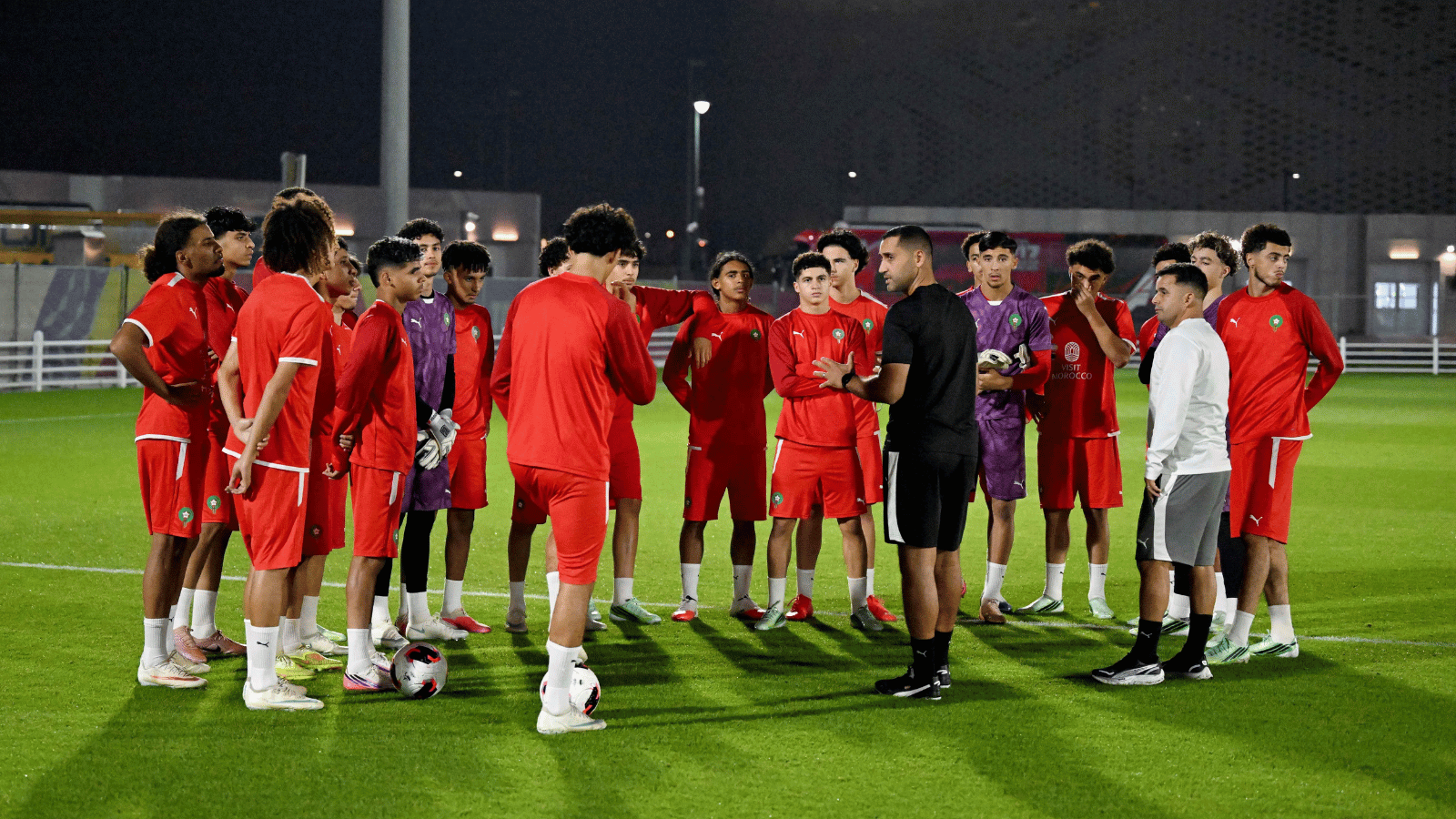
Morocco’s next generation of footballing talent is ready to take centre stage. The Atlas Lion Cubs begin their FIFA U17 World Cup Qatar 2026 campaign on Friday against Fiji, knowing that a positive opening result could prove crucial to their ambitions in a demanding Group H.
Under the guidance of Ahmed Kantari, the young Moroccan side will take to Pitch 7 at Doha’s Aspire Zone with one clear objective: start the tournament with three points and establish themselves as serious contenders for qualification to the knockout stages.
The opening fixture represents much more than the first match of the competition. For a generation carrying the expectations of Moroccan supporters, it is an opportunity to showcase its quality on the global stage and continue the country's impressive development at youth level.
A Promising Generation Ready for the World Stage
Morocco arrive in Qatar after securing qualification through a competitive U17 Africa Cup of Nations campaign hosted on home soil, where they reached the quarter-finals.
That experience has provided the young players with valuable exposure to high-pressure international football, while the final squad announced by FIFA highlights the depth of talent available to Kantari.
Among the most exciting names are Ibrahim Rabbaj of Chelsea, Ziyad Baha of Olympique de Marseille and Adam Mouak of Paris Saint-Germain.
Their development within some of Europe's most respected football academies reflects the growing international presence of Moroccan youngsters.
The squad also includes promising talents developed by the Mohammed VI Football Academy and RS Berkane, underlining the importance of Morocco's domestic football structures in producing players capable of competing internationally.
The combination of European academy experience and local development could give the Atlas Lion Cubs a valuable balance as they face different challenges throughout the tournament.
Fiji: An Opponent Morocco Cannot Underestimate
Fiji enter the competition as representatives of Oceania, with the ambition of challenging expectations and making their presence felt in Group H.
Although Morocco may be considered favourites on paper, the island nation should not be underestimated. Its players will be eager to demonstrate their competitiveness, relying on physical commitment, tactical discipline and collective determination.
At youth level, tournaments can produce unexpected results, particularly when teams are still adapting to the intensity and pressure of international competition.
For Kantari's players, maintaining concentration, controlling possession and converting their opportunities will be essential.
A strong start would allow Morocco to impose their identity early rather than allowing their opponents to grow in confidence.
A Difficult Group Featuring Spain and China
The importance of Friday's encounter becomes even clearer when considering the challenges awaiting Morocco in the remainder of Group H.
Alongside Fiji, the Atlas Lion Cubs must also contend with Spain and China, making every point potentially decisive in the race for qualification.
Spain represent a particularly demanding opponent, while China will also provide a different tactical challenge.
In such a competitive group, dropping points in the opening match could complicate Morocco's path considerably. A victory, on the other hand, would provide confidence and create a stronger position ahead of the remaining fixtures.
The coaching staff will therefore be looking for a disciplined performance, with the right balance between attacking ambition and defensive organisation.
Carrying Morocco's Youth Football Momentum Forward
Morocco's ambitions at this tournament extend beyond simply reaching the knockout stages. The objective is to build on the progress made by previous generations and continue establishing the country as a major force in international youth football.
The previous edition's quarter-final achievement provides a benchmark for the new generation. Matching that run would represent another positive step, while going further would underline the growing quality of Moroccan football development.
With players gaining experience in prestigious European academies and others emerging from Morocco's own development system, this squad has several reasons to approach the competition with confidence.
But the first challenge comes against Fiji, and the focus must remain on the immediate task.
The journey begins with 90 minutes in Doha. For the Atlas Lion Cubs, a strong opening could be the first step towards another memorable Moroccan adventure on the world stage.