
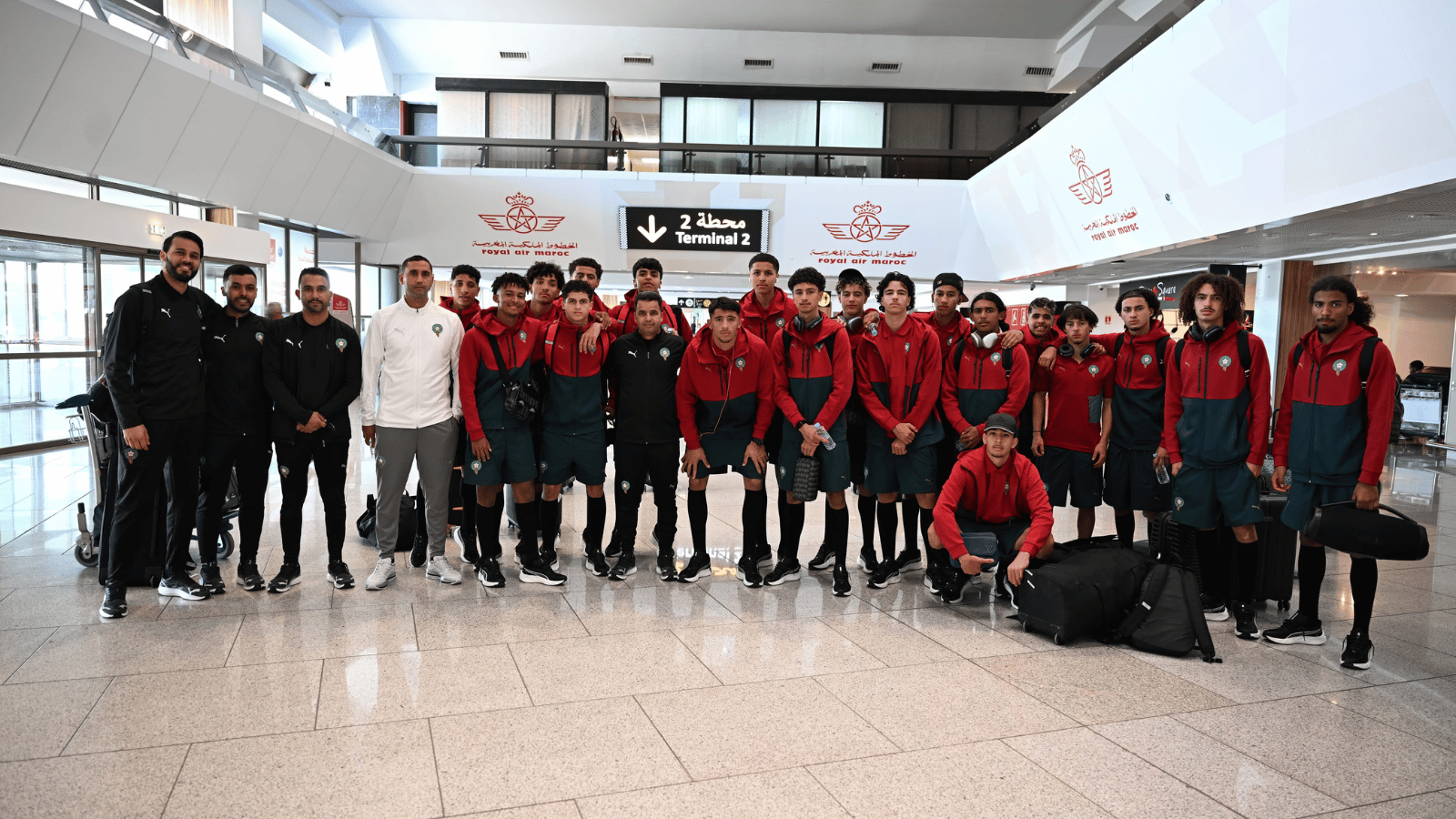
Morocco's next generation is preparing for a major international challenge, and the composition of Ahmed Kantari's 21-man squad for the 2026 FIFA U17 World Cup tells an important story about the evolution of Moroccan football.
Scheduled to take place in Qatar from November 19 to December 13, 2026, the tournament will offer the Atlas Lion Cubs an opportunity to demonstrate their potential against some of the world's strongest youth teams.
But beyond the names on the squad list, one particular feature stands out: the balance between players developed within Morocco and young talents emerging from the European diaspora.
This combination reflects a broader national strategy built around strengthening domestic football development while maintaining close connections with Moroccan talents growing up in some of Europe's most competitive academies.
Mohammed VI Football Academy: The Foundation of Morocco's Next Generation
At the heart of the squad is the Mohammed VI Football Academy, which continues to play a central role in developing Morocco's emerging footballers.
The academy has established itself as one of the country's most important football development institutions, providing young players with structured training, technical education and a pathway towards professional football.
Its influence is clearly visible throughout Kantari's selection, with representatives across several positions.
Goalkeeper Mohamed Harouch, defenders Adam Bouahdadi, Ayman Ezzakry and Ali Saif Eddine Machfouk, as well as forward Anass El Khazri, are among the academy products included in the squad.
Their presence underlines the importance of domestic development in building a competitive national team.
Beyond individual quality, players who grow together within the same football environment can develop valuable collective understanding, technical coordination and familiarity with Morocco's footballing identity.
The academy's continued contribution also demonstrates that Morocco are increasingly capable of developing talent at home rather than relying exclusively on players trained abroad.
Renaissance Berkane Adds More Local Quality
Another important contributor to the squad is Renaissance Berkane, whose youth development structure is represented in midfield by two promising players: Bilal Affas and Mohamed Amine Obakrim.
Their inclusion highlights the growing importance of domestic clubs in supporting Morocco's youth national teams.
Alongside the Mohammed VI Football Academy, Berkane represents another source of emerging talent capable of contributing to the national team's ambitions.
For Kantari, having players developed within Morocco's football system provides an important foundation as he prepares his team for the tactical and physical demands of a World Cup.
European Academies Bring International Experience
While domestic development remains central to the project, Morocco's ability to attract and integrate young players from the diaspora adds another dimension to the squad.
Several members of the selection have developed within prestigious European academies, where they have been exposed to different tactical systems, demanding training environments and high levels of competition.
Among the notable names are:
- Adam Mouak, representing Paris Saint-Germain.
- Ibrahim Rabbaj, developed within Chelsea's academy.
- Imran Talai, associated with Ajax Amsterdam.
- Mohamed Habib Zinbi, developed in Spain with Atlético Madrid.
- Ismail El Aoud, representing Valencia CF.
These players bring different footballing experiences and development backgrounds, potentially offering Kantari additional tactical flexibility.
Their exposure to European youth football can provide valuable qualities, including positional discipline, physical intensity, quick decision-making and experience in structured tactical systems.
For Morocco, maintaining strong connections with these talents from an early age is an important part of building competitive youth national teams.
Two Footballing Cultures, One Moroccan Identity
The real strength of this squad could lie in the way its different development backgrounds complement one another.
Players developed in Morocco often bring familiarity with one another, collective understanding and technical qualities shaped by the domestic football environment.
Meanwhile, those emerging from European academies can contribute different tactical habits, physical attributes and experiences acquired through competing in highly structured youth systems.
Rather than viewing these backgrounds as separate identities, Kantari's challenge will be to bring them together within one coherent team.
The objective is not simply to assemble talented individuals, but to create a collective capable of competing against opponents with different styles, tactical approaches and physical characteristics.
If successfully integrated, this diversity could become one of Morocco's biggest advantages in Qatar.
Ahmed Kantari Faces an Important Tactical Challenge
Managing a squad containing players from different footballing environments requires more than selecting the strongest individuals.
Kantari must establish clear roles, build chemistry between teammates and ensure that every player understands the team's collective objectives.
The midfield could be particularly important in this process, with domestic talents such as Affas and Obakrim potentially combining with players shaped by European football environments.
At the same time, the defensive organisation and attacking movement will need to reflect a consistent identity, regardless of where individual players developed.
The World Cup will provide the perfect test of whether this blend of talent can translate into performances at the highest youth international level.
Morocco's Football Development Model Continues to Evolve
The U17 squad represents more than a group of 21 promising players. It reflects the growing depth of Morocco's football development system and the importance of maintaining connections with young Moroccan talents around the world.
The Mohammed VI Football Academy continues to provide a strong domestic foundation, clubs such as Renaissance Berkane contribute to the development process, and European academies offer another pathway for emerging Moroccan players.
Together, these structures give the national team access to a wider pool of talent and different footballing experiences.
As the Atlas Lion Cubs prepare for Qatar, the ambition will be to turn that diversity into a competitive advantage.
Different academies, different journeys, one national identity. Morocco's next generation will head to Qatar united by the same ambition: to make the Atlas Lions' colours shine on the world stage.