
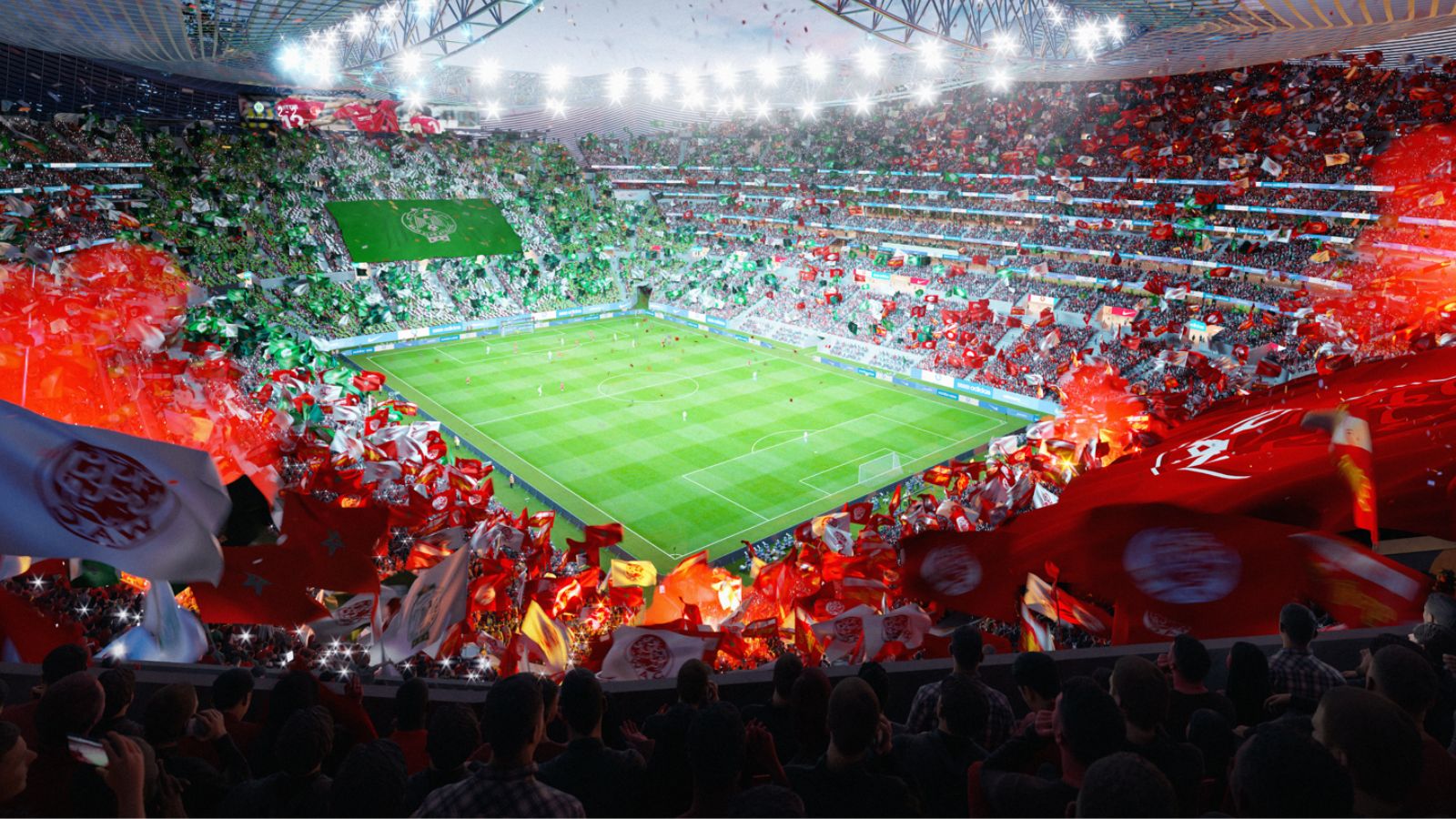
Morocco could have the opportunity to write another historic chapter for African football when the 2030 FIFA World Cup arrives, with the country among the hosts of the tournament alongside Spain and Portugal.
With discussions surrounding the possibility of hosting the final on African soil, several Guinean football observers have pointed to Morocco’s sporting progress, infrastructure and experience in organising major international events as important strengths.
A Potential Landmark for African Football
Africa has already hosted one FIFA World Cup, with South Africa staging the tournament in 2010. For journalist Sékou Koutoubou Kaba, bringing the final to Morocco would represent another significant moment for the continent.
He believes the country has the necessary sporting and infrastructural foundations to stage football’s biggest match, describing the possibility as a major achievement for African football.
A Strong Recent World Cup Record
Morocco’s sporting credentials have also become an important part of the discussion.
The Atlas Lions reached the World Cup semi-finals in Qatar in 2022, becoming the first African and Arab team to reach the last four of the competition.
Their continued progress on the international stage has strengthened the country’s reputation within global football.
Kaba also highlighted Morocco’s recent World Cup performances as evidence of the country’s growing status, alongside the quality of its football infrastructure.
Experience in Hosting Major Events
Beyond the national team’s performances, Morocco has gained extensive experience in organising major sporting competitions.
The recently staged Africa Cup of Nations provided another opportunity for the country to showcase its stadiums, transport networks and organisational capabilities on a continental scale.
That experience could be particularly valuable when preparing for an event on the scale of the World Cup.
The Importance of the Final
For journalist Pierre Fatewa Diawara, the final carries a special significance because it represents the climax of the entire tournament.
He argues that Africa would benefit from having the continent represented at the very end of the competition, particularly after Morocco was selected as one of the three host countries.
From that perspective, the possibility of staging the final in Morocco is viewed by the Guinean observers as an opportunity to give African football another prominent place on the global stage.
A Football Culture Built Around the Game
Another major argument concerns Morocco’s football culture and the ability of its supporters to create strong atmospheres.
The country has repeatedly demonstrated significant public interest in football, with domestic club matches attracting large crowds and major international tournaments generating considerable support.
The 2022 World Cup further demonstrated the enthusiasm surrounding the national team, as Moroccan supporters followed the historic run in Qatar.
That passion could become an important factor during a tournament expected to attract supporters from around the world.
Infrastructure Beyond the Stadiums
The discussion also extends beyond the stadiums themselves.
Morocco has invested heavily in modern sporting venues as well as transport and hospitality infrastructure designed to accommodate large numbers of visitors.
The country's international connectivity is another factor highlighted in the discussion, with Royal Air Maroc providing connections between Morocco and destinations across several continents.
For a World Cup, the ability to move supporters efficiently between host cities and international entry points will be an important part of the wider tournament experience.
Another Chapter for African Football
A World Cup final in Morocco would carry significance beyond the match itself.
South Africa's hosting of the 2010 World Cup opened a new chapter for African football, while Morocco’s historic run in Qatar demonstrated the continent’s ability to challenge at the highest level.
Four years before the 2030 tournament, the possibility of bringing the final to Morocco has therefore become part of a much broader conversation about Africa’s place in global football.
For the Guinean journalists who support the idea, Morocco’s infrastructure, footballing progress, organisational experience and passionate supporters provide a strong foundation for that ambition.