
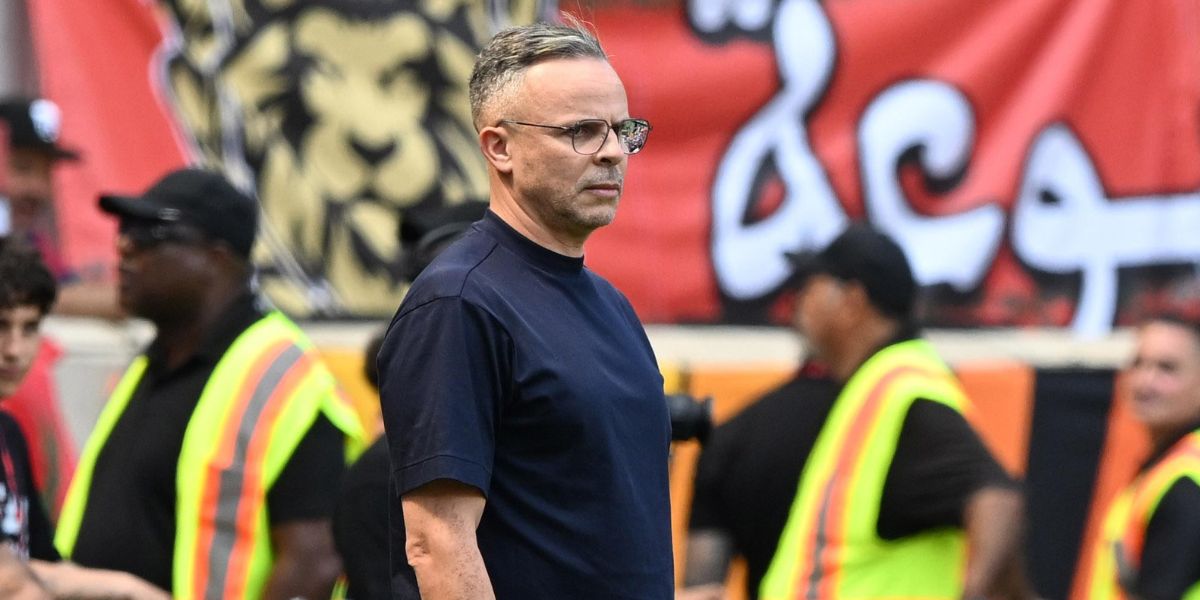
Not long ago, finding a reliable centre-forward was one of Morocco's biggest concerns. Now, Mohamed Ouahbi appears to have a very different problem: choosing between several attacking options capable of leading the line.
The Atlas Lions' emphatic 5-1 victory over Niger offered a perfect illustration of that transformation. Young striker Yassir Zabiri and experienced international Youssef En-Nesyri both found the net, demonstrating that Morocco can rely on different profiles depending on the demands of each match.
For Ouahbi, the competition for the number nine position is becoming increasingly healthy, with emerging talent challenging established names and several injured players still waiting to return.
Yassir Zabiri: The Emerging Attacking Force
At just 21 years old, Yassir Zabiri is making a strong case for a more prominent role in the national team.
The young forward needed only four minutes to announce himself against Niger, opening the scoring and rewarding the confidence placed in him by the national-team coach.
His international contribution follows an impressive start to the season with Spanish side Racing de Santander, where he had reportedly scored eight goals.
Zabiri offers qualities that make him particularly exciting. His acceleration, technical ability, movement and willingness to take on defenders allow him to create opportunities through individual actions rather than relying exclusively on service inside the penalty area.
His performances also reflect the progress of a player who previously helped Morocco win the FIFA U20 World Cup, bringing valuable experience from youth international football into the senior setup.
Rather than being viewed simply as a promising substitute, Zabiri is increasingly presenting himself as a serious option for the starting position.
Youssef En-Nesyri: Experience Still Makes the Difference
While Zabiri represents the future, Youssef En-Nesyri reminded everyone that his international experience remains a valuable asset.
The Al-Ittihad striker entered the match in the 69th minute, replacing Zabiri, and needed just eight minutes to find the net.
His goal, Morocco's fifth of the evening, demonstrated the different qualities he brings to the attack.
En-Nesyri's game is built around his physical presence, aerial strength, intelligent positioning and ability to exploit spaces inside the penalty area. These characteristics offer Morocco a traditional centre-forward profile that can be particularly effective against opponents defending deep or struggling to deal with crosses.
Questions surrounding his absence from previous international selections had raised doubts about his place in the national-team plans. His latest contribution, however, provided a timely reminder that experience and proven finishing ability still matter.
For Ouahbi, having a striker capable of changing the game from the bench is another valuable tactical weapon.
Ayoub El Kaabi, Soufiane Rahimi and More Options Await
The competition does not stop with Zabiri and En-Nesyri.
Morocco still have several attacking players capable of strengthening the squad once they return from injury or regain full fitness.
Ayoub El Kaabi remains one of the country's most reliable goalscorers, with his exceptional instinct inside the box and ability to finish difficult chances making him a major option.
Soufiane Rahimi offers another dimension through his mobility, versatility and ability to operate across different attacking positions. His movement and combination play can provide solutions beyond the traditional number nine role.
There is also Ismaël Saibari, who has demonstrated his ability to operate as a false nine. His technical qualities, movement between the lines and capacity to create numerical advantages in midfield give Ouahbi another tactical alternative.
Meanwhile, Hamza Igamane represents another promising attacking profile, adding further depth to Morocco's options as the national team looks towards the future.
From a Shortage of Strikers to Tactical Flexibility
The most encouraging development for Morocco is not simply the number of available forwards, but the diversity of their playing styles.
Zabiri offers dynamism, direct running and youthful energy. En-Nesyri brings physical strength, aerial dominance and international experience. El Kaabi provides instinctive finishing, while Rahimi adds movement and flexibility. Saibari can even allow the team to operate without a conventional centre-forward.
That variety gives Ouahbi greater freedom to adapt his attacking system according to the opponent.
Against teams defending deep, Morocco could benefit from a traditional striker who dominates the penalty area. Against more aggressive opponents, a mobile forward capable of exploiting spaces behind the defensive line may prove more effective.
The coach can also rotate his options throughout a demanding tournament without necessarily compromising the team's attacking quality.
A Healthy Competition Ahead of AFCON 2027
The emergence of Zabiri alongside the continued contribution of En-Nesyri represents a positive development for Moroccan football.
Rather than depending on a single goalscorer, the Atlas Lions are building an attacking department with multiple solutions, different characteristics and increasing competition for places.
The challenge for Ouahbi will be managing those options effectively, maintaining confidence among his forwards and identifying the combinations that bring the best out of the team.
Morocco once searched for the right number nine. Now, Mohamed Ouahbi has several answers to choose from, and that could become one of the Atlas Lions' greatest strengths heading towards AFCON 2027.