
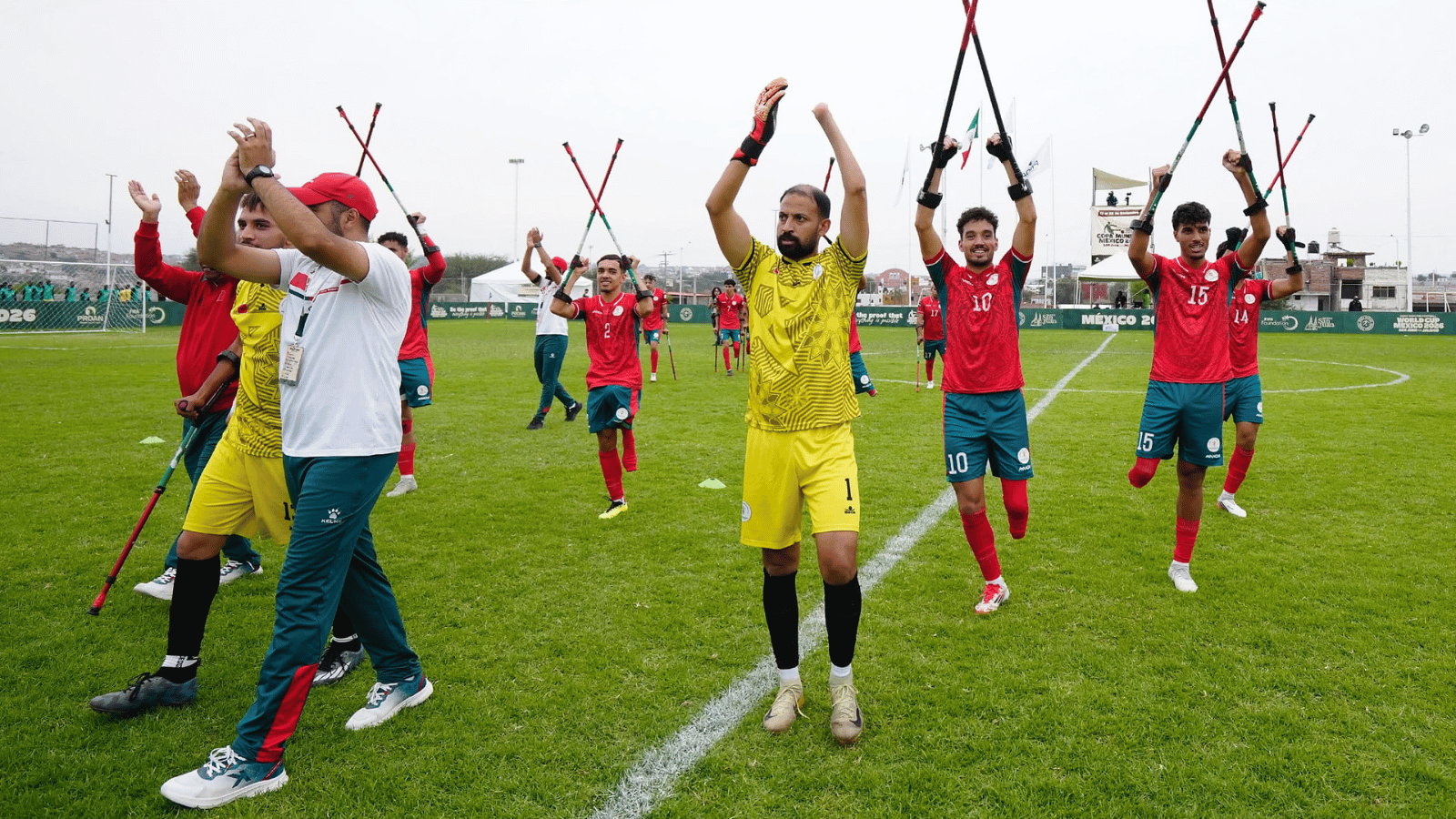
Morocco's dream of becoming world champions came agonisingly close to reality. The national amputee football team finished runners-up at the 2026 World Cup after suffering a narrow 1-0 defeat against Ghana in Sunday's final at the San Martín de San Juan de los Lagos Stadium in Mexico.
Although the Atlas Lions missed out on the ultimate prize, their achievement represents a historic milestone for Moroccan football. Reaching the final for the first time and finishing among the two best teams in the world is a remarkable accomplishment for a squad that demonstrated courage, unity and determination throughout the tournament.
Under head coach Othmane El Najmi, Morocco delivered a campaign that will be remembered as one of the finest chapters in the history of the national team.
A Narrow Final Decided by One Goal
The final against Ghana proved to be a closely contested encounter, with both teams fighting for the ultimate prize.
Morocco conceded the decisive goal early in the second half, leaving the Atlas Lions with a difficult challenge as they searched for an equaliser.
The Moroccan players responded with determination, launching repeated attacks and pushing forward in an attempt to bring the contest level. They continued fighting until the final whistle, refusing to abandon their hopes of lifting the trophy.
However, Ghana's defensive organisation proved decisive, as the African champions managed to protect their advantage and secure the world title.
For Morocco, the defeat was painful, particularly after such an impressive journey, but the silver medal remains a historic achievement.
Six Consecutive Victories on the Road to the Final
Before Sunday's final, the Atlas Lions had enjoyed an exceptional tournament, recording six consecutive victories and establishing themselves as one of the competition's strongest sides.
Their campaign began with three convincing group-stage performances:
- Morocco 4-1 Uruguay
- Morocco 2-1 United States
- Morocco 2-0 Uzbekistan
The team carried that momentum into the knockout stages, where the challenges became increasingly demanding.
In the round of 16, Morocco defeated Italy 4-1, before producing another dominant performance against Angola, the 2018 world champions and 2022 finalists, winning by the same scoreline.
Brazil Beaten in a Dramatic Semi-Final
The biggest test arrived in the semi-finals against Brazil.
After falling behind, the Atlas Lions demonstrated their resilience and attacking ambition to complete an impressive comeback, securing a 2-1 victory and booking their place in the World Cup final.
That result guaranteed Morocco a historic opportunity to compete for the world title for the first time.
It also confirmed the team's ability to rise to the occasion against elite international opposition, building confidence ahead of the decisive encounter with Ghana.
A Historic Achievement for Moroccan Football
Although the final did not produce the ending Morocco had hoped for, the team's overall performance deserves enormous recognition.
Finishing second in the world represents a significant step forward for Moroccan amputee football and reflects the commitment, discipline and collective spirit displayed by the players throughout the competition.
Their journey in Mexico has also provided an inspiring example of determination and sporting excellence, demonstrating the importance of creating opportunities for athletes to compete and succeed at the highest level.
The Atlas Lions may have missed out on the trophy, but they have earned something equally important: a place in Moroccan sporting history.
The Beginning of a New Chapter
From six consecutive victories to a dramatic semi-final comeback and a place in their first-ever World Cup final, Morocco have given their supporters plenty of reasons to celebrate.
The narrow defeat against Ghana will undoubtedly leave disappointment, but it should not overshadow the scale of the achievement.
The Atlas Lions return from Mexico as world runners-up, carrying a historic silver medal and the pride of a nation. They may have fallen one step short of the trophy, but they have taken Moroccan amputee football to unprecedented heights.