
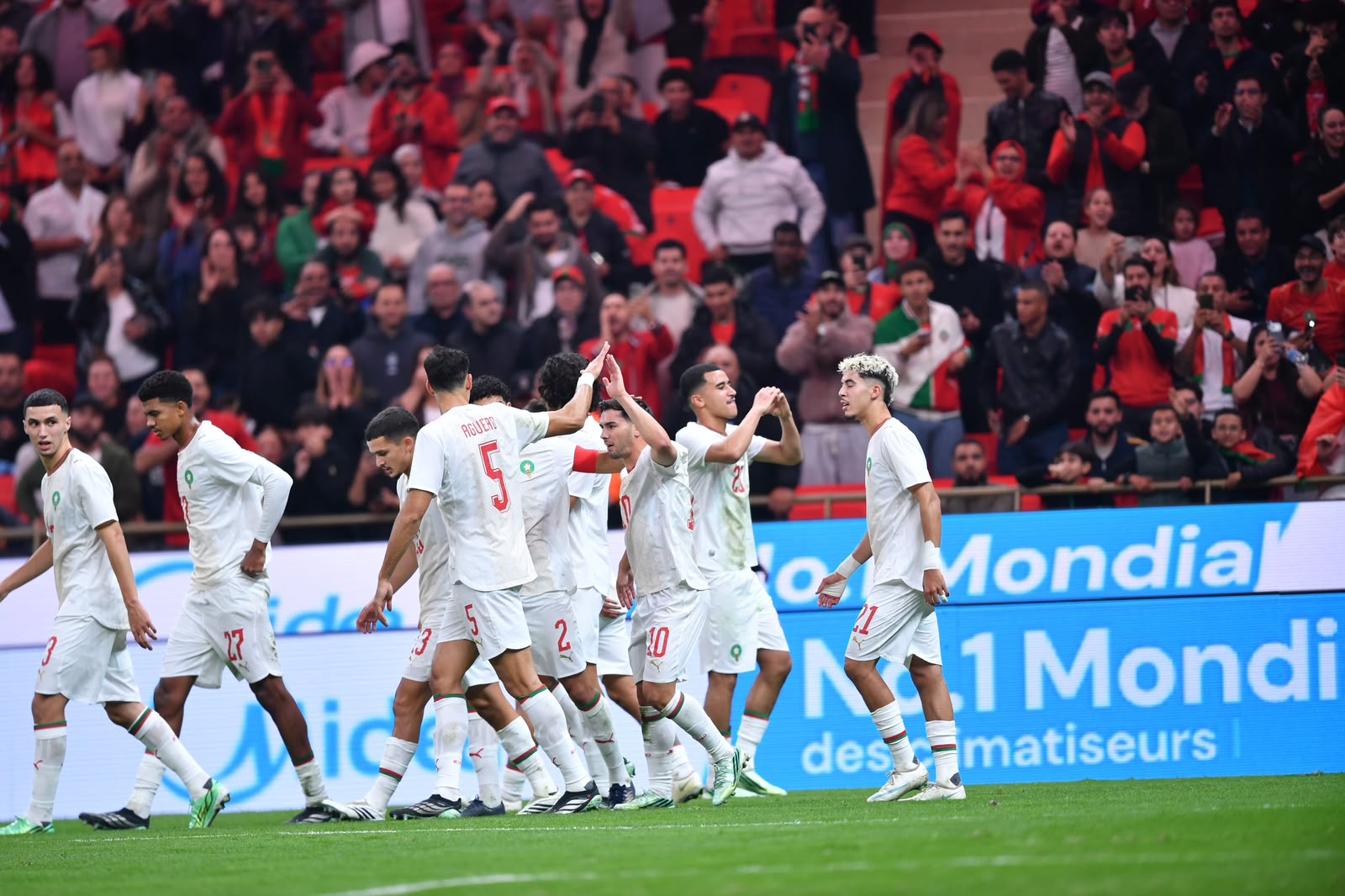
Morocco's ambitions for the 2030 FIFA World Cup continue to attract attention beyond its borders. Portuguese football analysts have identified the Atlas Lions as one of the national teams capable of challenging for the biggest prize in international football, pointing to the country's growing investment in the game and the quality of its emerging generation.
Speaking on Plano Tático, a podcast produced by Portuguese sports platform *Bola na Rede*, journalist Diogo Ribeiro predicted that Morocco could be among the five leading contenders to win the tournament, which will be jointly hosted by Morocco, Portugal and Spain.
His assessment reflects the growing recognition of Morocco's progress following its historic run at the 2022 World Cup in Qatar.
Morocco's Development Attracts Portuguese Attention
During the discussion, Ribeiro was joined by fellow analysts Ailton Ricardo Pereira and César Mayrinck, with the panel examining Morocco's evolution and its prospects ahead of 2030.
The analysts argued that the Moroccan national team has continued to develop since reaching the semi-finals in Qatar. They also suggested that the current generation possesses greater depth and quality than the squad that made history in 2022.
Their assessment was based on several factors, including investment in youth development, improvements in football infrastructure, training facilities and the growing pool of players available to represent the national team.
Morocco's progress in the FIFA rankings was also highlighted, with the Atlas Lions occupying fifth place at the time of the report.
A New Generation of Moroccan Talent
One of the most interesting aspects of the Portuguese discussion was the attention given to Morocco's emerging attacking talent.
The analysts highlighted several names, including Brahim Díaz, Yassine Jassim, Ismaël Saibari, Samir El Morabit, Yasser Zabiri, Othmane Maamma and Abde Ezzalzouli.
The growing presence of young Moroccan players across European football has strengthened the national team's options, offering a combination of technical ability, creativity, pace and attacking versatility.
Two players received particular attention.
Yasser Zabiri, who previously represented Portuguese club Famalicão, was singled out as one of the exciting talents to follow. His experience in Portuguese football has given him an additional connection to the country's football environment.
Meanwhile, Othmane Maamma attracted praise following his recognition as the best player at the FIFA U20 World Cup, which Morocco won. His individual achievement further underlined the quality emerging from the country's youth development system.
The 2030 World Cup: A Unique Opportunity at Home
Hosting the 2030 World Cup alongside Portugal and Spain could provide Morocco with another important advantage.
The Portuguese analysts pointed to the potential influence of home support, which could give the Atlas Lions an additional source of motivation throughout the tournament.
For Moroccan football, the competition represents much more than another appearance on the international stage. It is an opportunity to showcase the country's development, facilities and growing football culture before a global audience.
The combination of home support, an increasingly experienced national team and a promising generation of young players could make the tournament particularly significant for the Kingdom.
From the 2022 Historic Run to the 2030 Ambition
Morocco's semi-final appearance in Qatar changed the way the national team is viewed internationally. The Atlas Lions demonstrated that they could compete with the world's established football powers, creating a new benchmark for future generations.
The challenge now is to maintain that progress over the coming years.
Developing young players, strengthening domestic football, improving infrastructure and ensuring continuity within the national team will all play important roles in determining Morocco's level of competitiveness in 2030.
The Portuguese analysts' comments offer another indication of how Morocco's football project is attracting international attention.
The 2022 World Cup put Morocco among football's historic stories. The ambition for 2030 is to build on that achievement, this time with the world watching on Moroccan soil.