
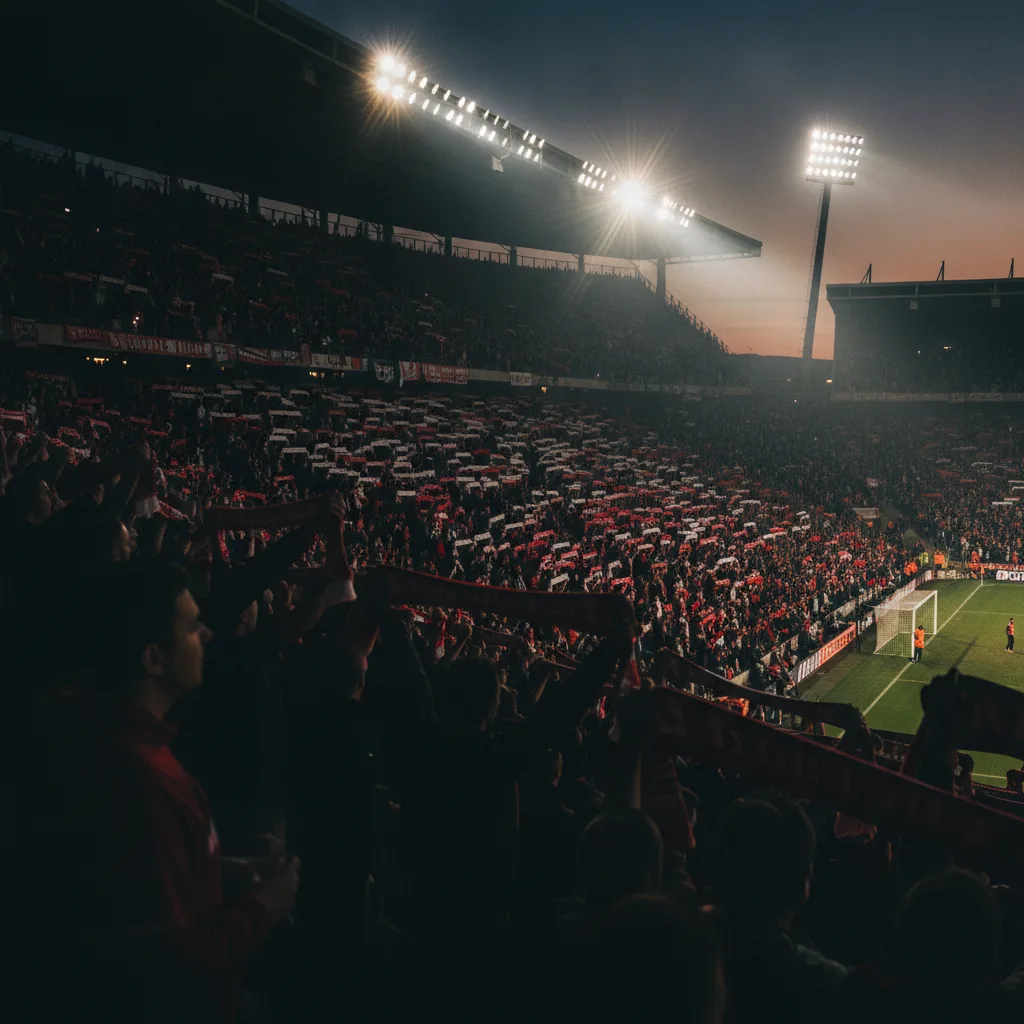
Morocco are the reigning champions of Africa — for the second time in their history. The first was in 1976. The second is 2025, and the route to that trophy is the most contested finish the Africa Cup of Nations has ever produced.
That Night in Rabat — What Unfolded on the Pitch
The 2025 AFCON final was played on 18 January 2026 at the Prince Moulay Abdellah Stadium in Rabat, with Morocco hosting Senegal.
The on-field result favoured Senegal. Pape Gueye scored the only goal in extra time, a thumping strike into the top corner — arriving after a chaotic second-half stoppage time in which Brahim Diaz's penalty, awarded on VAR for a foul by Senegal's El Hadji Malick Diouf, was saved.
In the immediate aftermath of that saved penalty, Senegal's players, led by head coach Pape Thiaw, walked off the pitch for roughly 15 minutes in protest against an earlier on-field decision that had ruled out a Senegal goal before VAR could review it. They returned only after captain Sadio Mané intervened. The match restarted, went to extra time, and Pape Gueye won it.
That was the on-field result. It is not the final result.
The First Ruling — 29 January 2026
On 29 January 2026, CAF's Disciplinary Board imposed fines and bans on both teams.
Senegal head coach Pape Thiaw was suspended for five matches and fined $100,000. Iliman Ndiaye and Ismaila Sarr were each banned for two matches. The Senegalese Football Federation was fined heavily.
Morocco were also sanctioned — captain Achraf Hakimi and Ismael Saibari received suspensions, and the Royal Moroccan Football Federation was fined. The match result was left unchanged at 1-0 to Senegal, and Morocco's protest invoking Articles 82 and 84 of the competition regulations was dismissed. The Royal Moroccan Football Federation appealed on 3 February.
The Verdict That Rewrote History — 17 March 2026
On 17 March 2026, CAF's Appeal Board — a separate body from the Disciplinary Board — overturned the on-field result.
The Appeal Board ruled that Senegal had forfeited the final by leaving the pitch without referee authorisation, triggering Article 82 and consequently Article 84, which mandates the match be recorded as a 3-0 default win for the opposing side.
Morocco were declared champions, with the match recorded as 3-0. CAF president Patrice Motsepe publicly defended the ruling, citing the independence of the Appeal Board. The Senegalese Football Federation called it a "travesty" with "no legal foundation."
The Road to Lausanne — CAS Takes Over
On 25 March 2026, Senegal formally appealed to the Court of Arbitration for Sport in Lausanne.
CAS proceedings of this kind typically take around twelve months to deliver a verdict — meaning the final word on AFCON 2025 will not arrive before mid-2027, well after the [2026 World Cup](/news/morocco-vs-brazil-world-cup-2026-opener) has been played out.
For now, the trophy and the record book sit with Morocco. Dima Maghrib.
From Rabat to MetLife — Why This Title Changes Everything
For Morocco, AFCON 2025 matters in two very real ways heading into [the World Cup in June](/news/morocco-vs-brazil-world-cup-2026-opener).
First, it is the only piece of senior continental silverware most of this squad has actually won. Hakimi, Diaz, Bounou, En-Nesyri — they walk into MetLife Stadium carrying a title on the CV, and the calmness that comes with it. Where 2022 was framed as a fairytale, this is a continuation.
Second, the AFCON-winning campaign was the last meaningful tournament Walid Regragui managed. The upheaval around the final is widely understood to be a factor in his departure, even if it is not the official reason.
[Mohamed Ouahbi inherited the side](/news/mohamed-ouahbi-morocco-head-coach) — not a squad he had to rebuild, but the very same group that had just won AFCON. That continuity is the single biggest reason Morocco are confident they can repeat what they did in Qatar.
The Decade That Rewrote Moroccan Football
The 2020s have, by any measure, been the most successful decade in Moroccan football history. AFCON 2025 sits inside a run that also includes:
- The 2022 World Cup semifinal (a first for any African or Arab country)
- [Qualifying for the 2026 World Cup first in the world](/news/how-morocco-qualified-2026-world-cup)
- [The 2025 U-20 World Cup title in Chile](/news/morocco-u20-world-cup-2025-champions), under the same Mohamed Ouahbi who is now senior head coach
- Hosting rights for the 2030 World Cup, alongside Spain and Portugal
It is the most concentrated period of success Morocco's football federation has ever overseen. The AFCON trophy — controversial path and all — is part of that story.
The CAS verdict that will eventually settle it is a story for 2027. But this squad does not wait on verdicts — they write new ones. They carry this crown into the biggest tournament on earth, a generation of players born across Morocco and across the diaspora, united under one flag, one colour, one dream.
The story of Moroccan football is not pausing for an arbitration hearing in Switzerland. It is running full speed toward North America.
Yalla Maghreb.
*See also:* [Morocco's 2022 World Cup run](/news/morocco-2022-world-cup-run) · [Morocco at the World Cup — a brief history](/news/morocco-at-the-world-cup-a-brief-history) · [Morocco's U-20 World Cup triumph](/news/morocco-u20-world-cup-2025-champions)