
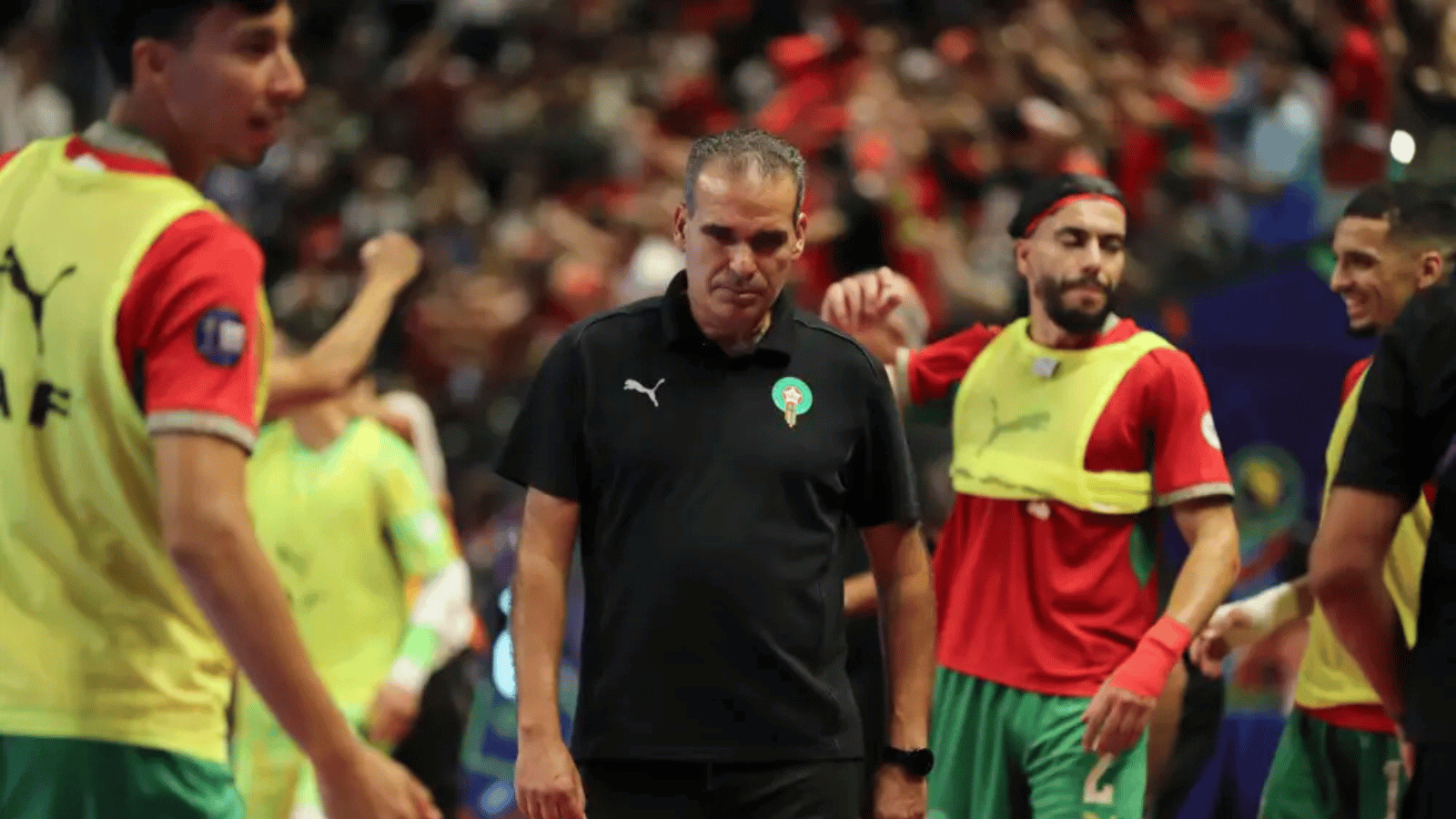
Morocco’s dominance of African futsal has reached another historic milestone, and Hicham Dguig believes the secret lies in much more than talent alone.
After guiding the Atlas Lions to a commanding 5-2 victory over Angola in the 2026 Africa Cup of Nations final in Rabat, the Moroccan coach expressed his pride in a team that continues to redefine the standards of the continental game.
The triumph, secured on Wednesday, October 21, delivered Morocco’s fourth consecutive AFCON crown, following their previous victories in 2016, 2020 and 2024. It also reinforced the country’s position as Africa’s leading futsal nation, with a winning culture built on technical excellence, collective discipline and sustained investment in the sport.
For Dguig, however, this unprecedented achievement belongs to an entire Moroccan futsal family.
Hicham Dguig Explains the Foundations of Morocco’s Success
Speaking after the final in comments reported by the Royal Moroccan Football Federation (FRMF), Dguig described his happiness at winning another continental championship and highlighted the importance of the recognition received from King Mohammed VI.
The coach recalled Morocco’s first AFCON triumph in 2016, when the team received the King’s congratulations after lifting the trophy in Johannesburg, South Africa. He described such recognition as an honour and credited the attention given to sport and its various disciplines as one of the factors behind Morocco’s continued progress.
Dguig also praised the facilities and organisation surrounding the 2026 tournament in Rabat, noting that participating national teams had congratulated Morocco on its hosting of the competition.
For the experienced coach, these elements reflect a broader sporting vision that allows national teams to develop, compete and pursue increasingly ambitious goals.
“Winning this fourth consecutive AFCON is something so great. It is an achievement. Something never seen before. We are very happy,” Dguig said.
His words captured the significance of a milestone that extends beyond one final or one generation of players. Four consecutive African championships represent years of consistency, preparation and an ability to deliver when expectations are at their highest.
Fouzi Lekjaa, the Players and the Supporters Behind the Dynasty
While celebrating the players’ achievements, Dguig was equally keen to recognise the institutional support that has helped Morocco establish itself at the summit of African futsal.
The coach highlighted the role of FRMF president Fouzi Lekjaa, praising his involvement in the organisational, financial, administrative and managerial aspects of the national team.
According to Dguig, the futsal selection has received the same attention as Morocco’s other national teams, contributing to an environment in which players and technical staff can concentrate on performance.
He also underlined the dedication of the squad, the encouragement of the supporters and the contribution of the wider futsal community.
These factors have helped create a team capable of handling pressure while maintaining its identity on the court. Morocco’s latest triumph was not simply the result of individual brilliance, but of a collective structure that continues to deliver at the highest level in Africa.
Youssef Jouad and Youssef Bensellam Receive Individual Recognition
Morocco’s historic campaign was accompanied by major individual honours, further underlining the quality within Dguig’s squad.
Youssef Jouad was named Player of the Tournament by the Confederation of African Football’s technical committee, recognising his contribution to Morocco’s successful campaign.
Goalkeeper Youssef Bensellam, meanwhile, received the award for the competition’s best goalkeeper, highlighting the defensive strength that complemented the Atlas Lions’ attacking firepower.
Morocco also collected the Fair Play Award, adding another distinction to an already memorable tournament.
The individual accolades reflected the balance within the champions’ squad. While their attacking combinations attracted attention, their defensive organisation and collective discipline proved equally important in securing another continental crown.
Soufiane El Mesrar Sets His Sights on the 2028 World Cup
Captain Soufiane El Mesrar shared Dguig’s emotion after the final, expressing his happiness at winning a fourth consecutive African title.
The Moroccan captain dedicated the achievement to King Mohammed VI and Fouzi Lekjaa, while also acknowledging the supporters who helped create an unforgettable atmosphere in Rabat.
El Mesrar admitted that the magnitude of the occasion had left him almost lost for words. Yet his attention quickly shifted towards the next major challenge awaiting this generation.
“The next step is the World Cup. This generation deserves to achieve a good performance on the world stage,” the captain said.
His message reflects the ambitions of a team that has already established itself as Africa’s benchmark but now wants to demonstrate its quality against the world's best.
The next FIFA Futsal World Cup is scheduled to take place from October 7 to 29, 2028, with the host country still to be determined.
For Morocco, the tournament represents an opportunity to build on its continental success and show that the qualities behind its African dominance can translate into an even greater impact internationally.
From African Dominance to Global Ambition
Morocco’s fourth consecutive AFCON triumph confirms the remarkable consistency of a national team that has turned sustained success into an expectation.
Under Dguig’s leadership, the Atlas Lions have developed a recognisable identity based on technical precision, tactical intelligence, fluid attacking combinations and composure under pressure. Their latest campaign once again demonstrated their ability to combine individual quality with collective organisation.
Yet the coach’s post-final comments also offered an important reminder: dynasties are built through more than victories. They require dedicated players, experienced leadership,
institutional backing, quality infrastructure and supporters who believe in the project.
Morocco have brought all those elements together to establish an extraordinary period of continental supremacy.
Now, with four consecutive African crowns secured, the focus turns towards the global stage. El Mesrar and his teammates know that the World Cup will present a different level of challenge, but they will approach it with the confidence of champions and the desire to make their country proud.
Africa belongs to Morocco once again. The next ambition is to turn a historic continental dynasty into a lasting statement on the world stage.