
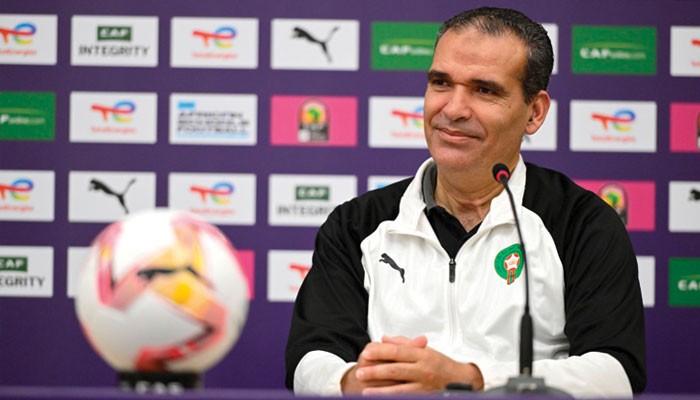
Morocco’s futsal national team sent another powerful message to their continental rivals, sweeping aside Zambia 7-0 in Rabat to secure their place in the semifinals of the 2026 Futsal Africa Cup of Nations. Yet, despite another commanding display, head coach Hicham Dguig made it clear that his team cannot afford to become complacent in their pursuit of a fourth consecutive continental title.
Playing at the Prince Moulay Abdellah Sports Hall, the defending champions followed their opening 4-0 victory over Algeria with another emphatic performance. Morocco controlled the contest, showcased their attacking quality and maintained their defensive solidity, even as Zambia attempted to frustrate them with a compact defensive setup.
For Dguig, however, the result was only part of the story. With the knockout rounds approaching, the Moroccan coach is determined to sharpen his team's performance before the decisive matches.
Dguig Recognises the Growing Challenge in African Futsal
Following the victory, Dguig welcomed Morocco's qualification for the last four but acknowledged that the performance contained both positives and areas requiring improvement.
- “Qualifying for the semifinals is a good thing. There were positives and negatives in this match, but overall, the performance was positive,” he said, according to SNRT News.
The coach also highlighted the progress made by Zambia and the broader development of futsal across the continent. Morocco defeated the same opponents 13-0 in 2024, but the latest encounter demonstrated how much the competitive landscape has changed.
- “This edition is stronger than previous ones. The teams have prepared well. We beat Zambia 13-0 in 2024, but today they showed improvement,” Dguig explained.
His assessment reflects a wider reality for Morocco: maintaining continental dominance requires constant adaptation. As rival nations improve their organisation and tactical preparation, the defending champions must continue finding solutions against increasingly difficult opponents.
Patience and Movement Unlock Zambia’s Defence
Zambia presented Morocco with a different tactical challenge by defending deep and operating with a compact zonal system. Rather than leaving space behind their defensive line, the visitors concentrated on limiting opportunities and forcing the hosts to work for openings.
Dguig explained that Morocco often find more space against teams that press aggressively or commit additional players forward. Against a deeper defensive block, the challenge becomes one of patience, intelligent movement and precise execution.
The Atlas Lions nevertheless established a four-goal advantage before half-time, demonstrating their ability to break down a disciplined opponent. They maintained their attacking intent after the restart, avoiding the frustration that can arise when space is limited.
That experience could prove valuable in the semifinals, where opponents are likely to arrive with carefully prepared defensive plans. Morocco's ability to vary their attacking approach may be just as important as their individual quality.
El Fenni Leads a Ruthless Moroccan Attack
The foundation for Morocco's victory was laid early by Idriss Raiss El Fenni, who scored a remarkable hat-trick within the opening nine minutes.
His explosive start immediately put Zambia under pressure and allowed Morocco to dictate the rhythm of the contest. Yanis Ahmed Erradaf added a fourth goal before the interval, giving the hosts a comfortable advantage heading into the second half.
El Fenni continued where he had left off after the restart, scoring his fourth goal of the match to underline his influence on the performance.
Soufiane Charraoui and Youssef Jouad then added late goals to complete the 7-0 rout.
The result followed Morocco's 4-0 win over Algeria in their opening fixture. After two matches in Group A, the defending champions had collected six points, scored 11 goals and conceded none, an impressive record that underlined their early control of the competition.
Charraoui Injury Raises Concern Despite the Victory
Morocco's celebrations were tempered by concern over Charraoui, who sustained an injury following a challenge from Zambia's Hendricks Chisanga. The Zambian player was sent off following the incident.
Dguig expressed hope that the injury would not prove serious, although no further details about Charraoui's condition were provided.
His availability will be an important consideration as Morocco prepare for the knockout rounds. The forward's contribution to the team's attacking options makes his fitness worth monitoring, particularly with the competition entering its most decisive phase.
For the coaching staff, the priority will be to assess the injury and ensure that the squad is prepared for the challenges ahead without taking unnecessary risks.
Libya Clash Offers Final Preparation Before the Semifinals
Morocco have already secured their place in the last four, but their final Group A fixture against Libya on Friday offers another opportunity to build momentum.
The match will allow Dguig to assess his players, refine tactical details and address the weaknesses identified against Zambia before the pressure increases in the knockout stage.
Morocco are chasing a fourth consecutive Futsal AFCON crown, having won the continental title in 2016, 2020 and 2024. Achieving that goal on home soil would further strengthen the country's standing as a major force in African futsal.
The 7-0 victory has brought the Atlas Lions another step closer to that ambition. But Dguig's message remains clear: the scoreline may be convincing, yet the real test lies ahead.
If Morocco can combine their attacking firepower with continued tactical improvement and maintain the right level of concentration, they will have every reason to believe another continental triumph is within reach.