
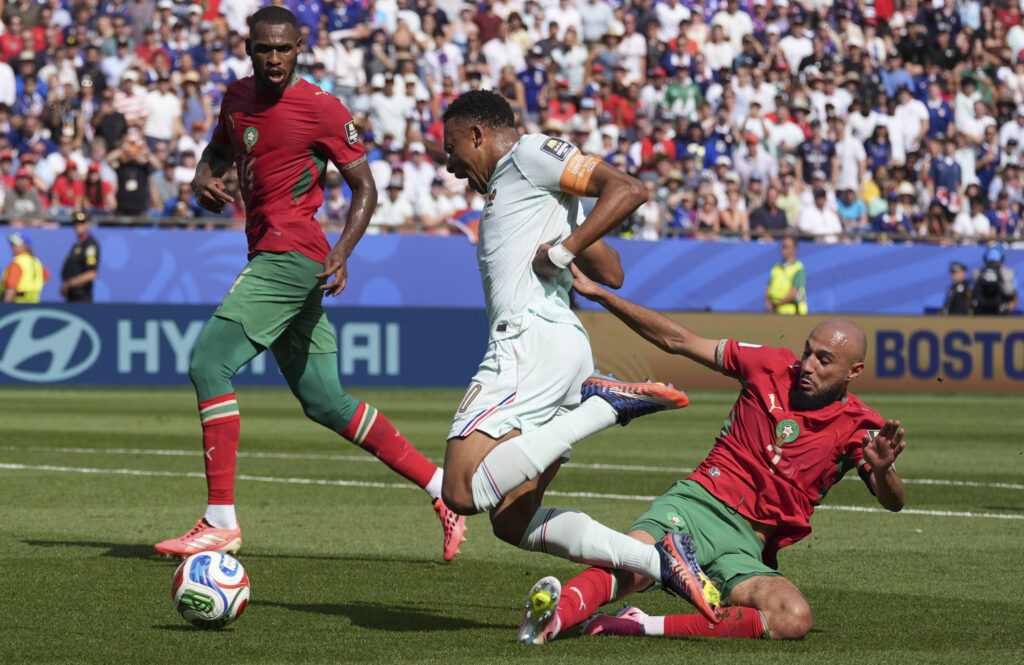
Morocco's FIFA World Cup journey may have ended in the quarterfinals against France, but Foot Africa believes the Atlas Lions leave the tournament with far more reasons for pride than disappointment.
Despite a 2-0 defeat to one of the competition's strongest sides, the publication argues that Morocco has once again demonstrated its place among the world's top national teams by reaching the last eight for a second consecutive World Cup.
A Historic Achievement Continues
According to Foot Africa, Morocco's latest quarterfinal appearance reflects the remarkable progress of the national team in recent years.
Rather than focusing solely on the result against France, the report highlights the broader picture, noting that back-to-back appearances among the world's top eight teams underline the consistency and growth of Moroccan football on the global stage.
France Limited Morocco's Attack
The report noted that Morocco found it difficult to create clear scoring opportunities against a disciplined French defense.
The Atlas Lions finished the match with five attempts on goal, including one shot on target, while recording an expected goals (xG) figure of 0.14, illustrating the challenge of breaking down one of the tournament's strongest defensive units.
Foot Africa suggested that Morocco may have hoped to show greater attacking ambition, but also acknowledged the quality and experience of the French side.
Key Absences Shaped the Match
The publication also pointed to the circumstances surrounding the quarterfinal, emphasizing that Morocco entered the contest without two important players.
The absence of Chadi Riad forced head coach Mohamed Ouahbi to reorganize his defensive line, with Noussair Mazraoui moving into central defense after impressing at left-back throughout the tournament.
Foot Africa noted that the adjustment inevitably influenced the team's overall balance on both ends of the pitch.
Saibari's Absence Felt
The report described the absence of Ismael Saibari as another significant factor.
Having enjoyed an outstanding tournament, the Bayern Munich midfielder had become one of Morocco's key attacking figures through his ability to retain possession, connect midfield with attack, and create space for teammates.
According to Foot Africa, Morocco missed those qualities against France, particularly when attempting to play through the opposition's high pressure.
Debate Over the Opening Goal
The publication also acknowledged the discussion surrounding France's opening goal.
Foot Africa noted that some observers questioned a possible handball by Adrien Rabiot in the build-up, with no VAR review taking place during the sequence. The incident became one of several talking points following the quarterfinal.
A Foundation for the Future
Ultimately, Foot Africa concluded that Morocco has little reason to dwell on disappointment.
Back-to-back World Cup quarterfinal appearances represent another milestone in the continued rise of Moroccan football, reinforcing the Atlas Lions' status as regular contenders on the world's biggest stage.
While the report suggests there is still room for further growth—particularly in attacking depth and squad options—it views the tournament as another major step forward for a team that continues to inspire supporters at home and across the global Moroccan diaspora.
Back-to-back World Cup quarterfinal appearances have reinforced Morocco's place among the world's leading football nations, providing another powerful reminder of how far the Atlas Lions have come—and how much more they are capable of achieving.