
The debate over the venue for the 2030 FIFA World Cup final has taken another interesting turn, with a prominent Spanish journalist openly backing the possibility of hosting the historic match in Casablanca.
David Sánchez, a respected Spanish football journalist and contributor to *El Partidazo de COPE*, has offered a different perspective on the growing discussion surrounding the competition's showpiece event. Rather than automatically favouring Spain, he believes the decision should come down to one fundamental question: which stadium offers the best conditions to host the final?
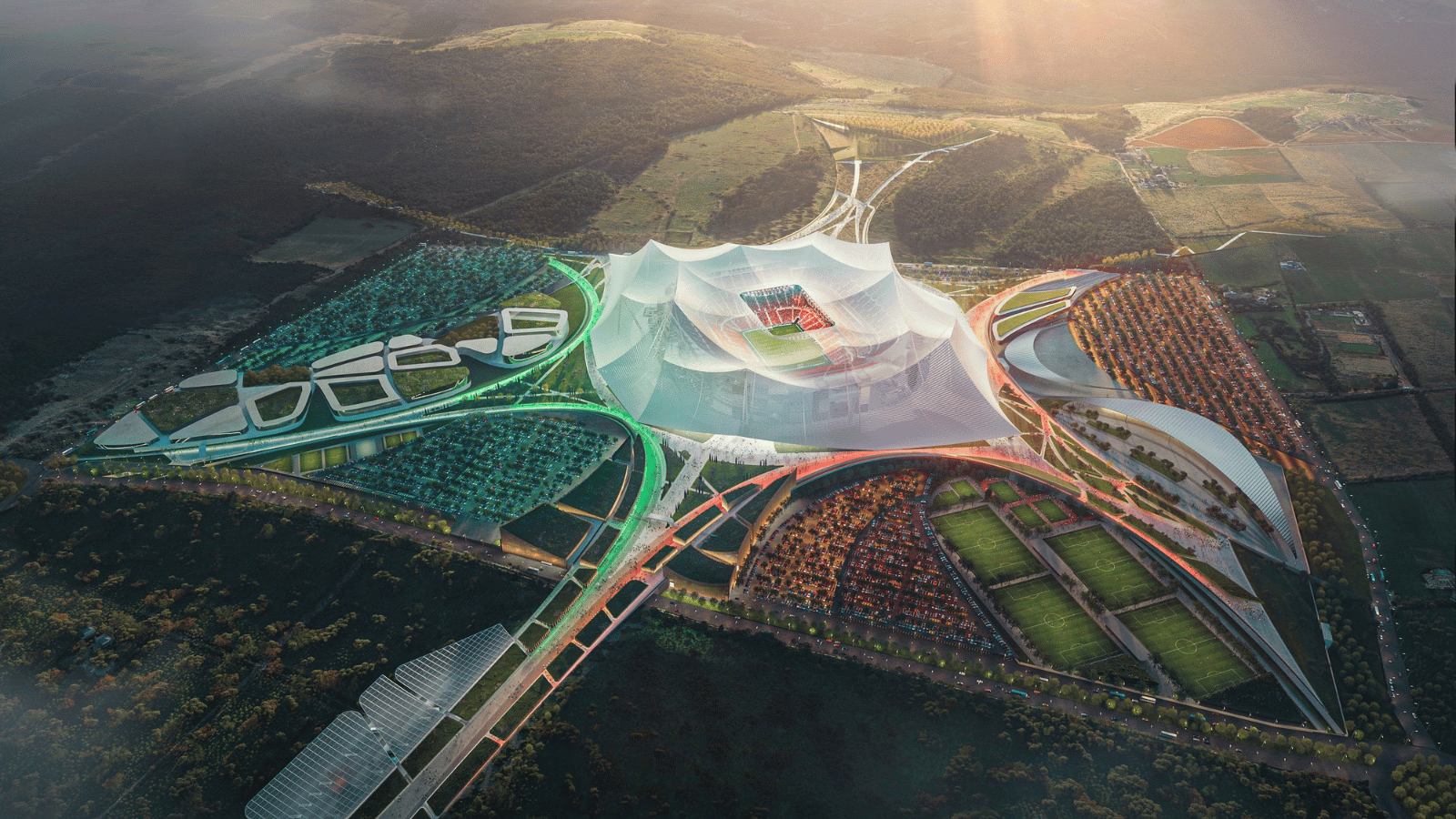
His comments bring renewed attention to Morocco's ambitious plans and the future Grand Stade Hassan II, which is expected to become one of the world's largest football stadiums.
David Sánchez Makes the Case for Casablanca
Speaking on *El Partidazo de COPE*, Sánchez questioned why the final should automatically be awarded to a Spanish venue if Casablanca ultimately offers the strongest stadium.
"We want to play the final in the best stadium, don't we? And if FIFA considers that Casablanca has the best stadium, because that is the case, don't you think it would be logical and normal?" he argued.
The journalist went further, suggesting that if the future Moroccan stadium delivers on its promises, hosting the final there would be the most reasonable outcome.
"If this stadium, as claimed, is going to be the biggest and most modern, and FIFA receives the keys two months before the competition, then the most logical thing is for the final to take place there," he added.
His position stands out in a debate where much of the Spanish media and political discussion has focused on keeping the final within Spain.
Grand Stade Hassan II: Morocco's Ambitious Vision
At the centre of Morocco's ambitions is the Grand Stade Hassan II in Casablanca, a project designed to become a landmark venue for international football.
With a planned capacity of approximately 115,000 spectators, the stadium is expected to rank among the largest football venues in the world.
Beyond its impressive capacity, the project is intended to provide modern facilities and an extensive supporting infrastructure, including transport connections, access routes and services for teams, supporters and international media.
These ambitions have strengthened Morocco's position in discussions surrounding the 2030 tournament's most prestigious fixture.
For the Kingdom, the project represents more than the construction of a football stadium. It forms part of a broader vision to demonstrate its organisational capabilities and establish itself as a leading destination for major international sporting events.
Spain's Political Debate Intensifies
The discussion has also attracted considerable political attention in Spain.
Alberto Núñez Feijóo, leader of the People's Party (PP), recently argued that Spain should not host the World Cup if it does not receive the final.
He described the issue as a matter of national honour and pride, reflecting the importance attached to hosting the tournament's decisive match.
However, Sánchez's intervention offers a different perspective: the final should be awarded according to the quality and suitability of the available stadiums rather than national expectations.
That argument also highlights an essential point. The 2030 World Cup is a historic joint hosting project involving Morocco, Spain and Portugal, with FIFA responsible for determining the final venue.
FIFA Will Make the Final Decision
Despite the growing debate, no final decision should be assumed at this stage.
The Santiago Bernabéu in Madrid, Barcelona's Camp Nou and Casablanca's future Grand Stade Hassan II have all featured prominently in discussions about potential venues.
Each represents a different proposition, but the ultimate decision belongs to FIFA, which will assess the tournament's requirements and the suitability of the candidate stadiums.
Sánchez's comments nevertheless demonstrate that support for Casablanca's candidacy is not limited to Morocco. Voices within Spanish football media are also acknowledging the possibility that the Moroccan project could offer the strongest setting for the biggest match of the tournament.
Casablanca's World Cup Ambitions Gain Momentum
For Morocco, the opportunity to host the 2030 World Cup final would represent an extraordinary milestone in its sporting history.
The Grand Stade Hassan II has the potential to become a symbol of the country's football ambitions, while the tournament itself offers an opportunity to showcase Morocco alongside its European co-hosts.
The debate is far from over, and the final decision remains in FIFA's hands. But one thing is becoming increasingly clear: Casablanca deserves to be considered seriously in the race.
The 2030 World Cup will be a celebration of three host nations. And if the Grand Stade Hassan II delivers on its ambitious vision, Casablanca could have a compelling case to host football's greatest night.