
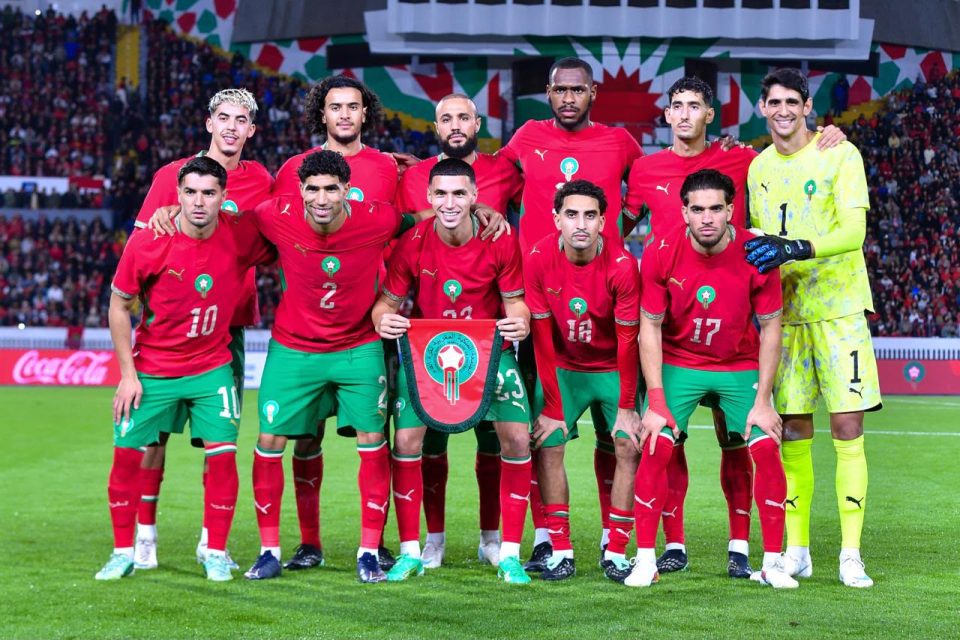
Morocco may have lost the 2025 Africa Cup of Nations title following the latest ruling by the Court of Arbitration for Sport, but the ambitions of the Atlas Lions remain firmly intact.
After months of legal proceedings surrounding the controversial final in Rabat, CAS ruled in favour of Senegal, overturning CAF's Appeal Jury decision that had awarded Morocco a 3-0 victory by forfeit.
The Royal Moroccan Football Federation defended its position through the available sporting channels. The case has now reached a new conclusion, but Morocco's footballing journey extends far beyond the outcome of a dispute decided in Lausanne.
While the controversy dominated headlines across African football, the national team continued building on its progress. Morocco reached the quarter-finals of the 2026 FIFA World Cup, climbed to fifth in the FIFA world rankings and secured qualification for AFCON 2027 in November.
These achievements tell a different story: that of a national team which has established itself among the world's leading football nations and intends to remain there.
From Qatar to North America: Four Years That Transformed Morocco
To understand Morocco's rise, it is worth looking back to December 2022.
At the FIFA World Cup in Qatar, the Atlas Lions made history by becoming the first African and Arab nation to reach the semi-finals of the competition.
Victories over Belgium, Spain and Portugal captured the imagination of football supporters around the world before Morocco's historic journey ended against France.
That remarkable fourth-place finish transformed the perception of Moroccan football. The Atlas Lions were no longer simply a team capable of producing an occasional surprise. They had demonstrated that they could compete with the strongest nations on the biggest stage.
However, success also brought new expectations. Reaching the latter stages of major tournaments was no longer enough. Morocco needed to maintain its competitiveness, renew its squad and demonstrate that the Qatar achievement was the beginning of a sustained period of excellence.
The 2023 Africa Cup of Nations, held in Ivory Coast in early 2024, provided a difficult reminder of how challenging that task could be. Morocco were eliminated in the round of 16 by South Africa, ending a tournament that had begun with significant expectations.
Yet the setback did not derail the wider project. The national team continued developing its squad, introducing emerging talents and strengthening its competitive foundations.
The journey to the 2025 AFCON final in Rabat represented another important step, even though the tournament ultimately ended in controversy.
Then came the 2026 World Cup in the United States, Canada and Mexico.
Morocco once again demonstrated its ability to compete at the highest level, recording a 1-1 draw against Brazil, a 1-0 victory over Scotland and a 4-2 win against Haiti, before progressing through further challenges against the Netherlands and Canada.
The campaign eventually ended in the quarter-finals following a 2-0 defeat against France.
Four years earlier, reaching that stage would have been celebrated as another extraordinary achievement. Today, it reflects the level of expectation surrounding a Moroccan team that has become a regular contender on the international stage.
Two consecutive World Cup campaigns, a semi-final and a quarter-final: Morocco have established a remarkable standard for African football.
From 40th to Fifth: A Rise Built on Consistency
Morocco's transformation is also reflected in the FIFA world rankings.
Back in 2017, the Atlas Lions occupied 40th place. Nine years later, they had climbed to fifth in the world, confirming the scale of their progress.
That rise has not come from one exceptional tournament alone. It reflects years of consistent performances, successful qualification campaigns and increasingly competitive displays against established international opponents.
On November 14, Morocco benefited from results involving several of its direct rivals to climb two positions in the live FIFA rankings.
Brazil's 3-2 defeat against Japan initially allowed the Atlas Lions to move from seventh to sixth. Portugal's subsequent 4-1 loss against Denmark then opened the door to the Top 5.
The fifth position represents recognition of a sustained period of progress and reinforces Morocco's status among international football's leading nations.
The challenge now is to protect that position and continue improving. Morocco have moved beyond isolated moments of success and must maintain the consistency required to compete with the world's best.
A New Generation Begins to Take Responsibility
One of the most encouraging aspects of Morocco's progress is the emergence of a new generation.
Since taking charge in March, Mohamed Ouahbi has gradually introduced new profiles into the national team while maintaining the experience and leadership of established internationals.
Senior figures such as Achraf Hakimi, Yassine Bounou, Nayef Aguerd, Noussair Mazraoui and Brahim Díaz continue to provide an important foundation.
Alongside them, younger talents are beginning to make their presence felt. Ayyoub Bouaddi, Bilal El Khannouss, Yassir Zabiri, Abdellah Ouazane and Ayoub Oufkir represent a promising generation that could shape Morocco's future.
The November qualifying fixtures against Niger offered a particularly interesting opportunity to assess that potential.
In the first encounter, played in Casablanca on November 13, Morocco recorded a convincing 5-1 victory, with Zabiri and Oufkir among the goalscorers. For Oufkir, the occasion was especially memorable as he scored on his international debut.
Four days later, in Rabat, 17-year-old Abdellah Ouazane delivered another memorable moment, scoring the only goal in a 1-0 victory.
Those results secured Morocco's qualification for AFCON 2027 with four consecutive victories in the qualifying campaign.
More importantly, they demonstrated that Ouahbi has additional options available as he prepares for the next major international tournament.
The task will be to find the right balance between established leaders and emerging players, ensuring that the new generation develops without losing the experience and stability that have helped Morocco reach its current level.
The Rabat Final and Its Impact on Football Regulations
Although the AFCON 2025 legal dispute has now reached another conclusion, the events surrounding the final have also contributed to wider discussions about football regulations.
On April 28, the International Football Association Board (IFAB) approved changes to the Laws of the Game for the 2026-2027 season.
Among the measures are provisions addressing players who deliberately leave the field of play to protest against an official's decision.
Competition organisers can introduce direct red-card sanctions for players who leave the pitch in such circumstances. Players or members of the coaching staff who encourage teammates to engage in that behaviour can also face disciplinary action.
The IFAB also strengthened provisions concerning matches abandoned because of a team's conduct, including the possibility of a forfeit when the relevant regulatory conditions are met.
These changes are not retroactive and do not alter the outcome of the 2025 AFCON case.
Nevertheless, the incidents in Rabat highlighted the difficulties that collective protests and prolonged interruptions can create for the game. The subsequent regulatory changes provide competition organisers with stronger tools to address such situations.
The Moroccan football community can now look ahead while recognising that the controversy surrounding the final has also become part of a wider conversation about the protection and integrity of football.
AFCON 2027: A New Target for the Atlas Lions
Morocco's next major objective is already clear.
The 2027 Africa Cup of Nations, jointly hosted by Kenya, Uganda and Tanzania, represents another opportunity for the Atlas Lions to demonstrate their progress and pursue the continental title.
Qualification is already secured. With 12 points from their first four qualifying matches, Morocco have booked their place at the tournament before the end of the qualifying campaign.
But for Mohamed Ouahbi, qualification is only the beginning.
Following the victory over Niger on November 17, the national-team coach emphasised the importance of continuing the work, improving the team's performances and finishing at the top of the group.
His ambition for AFCON 2027 is equally clear: to win the tournament.
That objective will require more than individual talent. Morocco must develop tactical consistency, strengthen its squad depth and ensure that its younger players are ready to contribute when the biggest challenges arrive.
A Football Project Bigger Than One Final
Moroccan football's progress has never depended on a single match, and its future cannot be defined by one legal ruling.
Over recent years, the Kingdom has invested significantly in football development, infrastructure, youth training and technical preparation.
The Mohammed VI Football Complex, the achievements of Morocco's different national teams and the growing presence of Moroccan players in Europe's leading leagues all reflect the foundations of a broader football project.
The historic achievement of the Morocco U20 national team, crowned world champions in 2025, provides further evidence that the country's progress extends beyond the senior men's team.
The fifth position in the FIFA rankings is therefore more than a number. It represents years of work, ambition and increasingly consistent performances.
It also brings greater responsibility. Morocco must continue producing talent, maintaining competition within the squad and approaching every major tournament with the same determination.
The Next Chapter Belongs to the Atlas Lions
The 2025 AFCON controversy may have delivered a disappointing outcome for Morocco, but it does not erase what the national team has achieved over the past four years.
The Atlas Lions have reached the semi-finals and quarter-finals of consecutive World Cups, climbed into the world's Top 5 and secured their place at AFCON 2027.
Now, a new generation is beginning to emerge alongside the experienced players who helped transform Morocco's international standing.
The next challenge is to turn that progress into continental success.
Morocco have a ranking to defend, a new generation to develop and an Africa Cup of Nations title to pursue. The story of the Atlas Lions continues, and their ambitions remain as high as ever.