
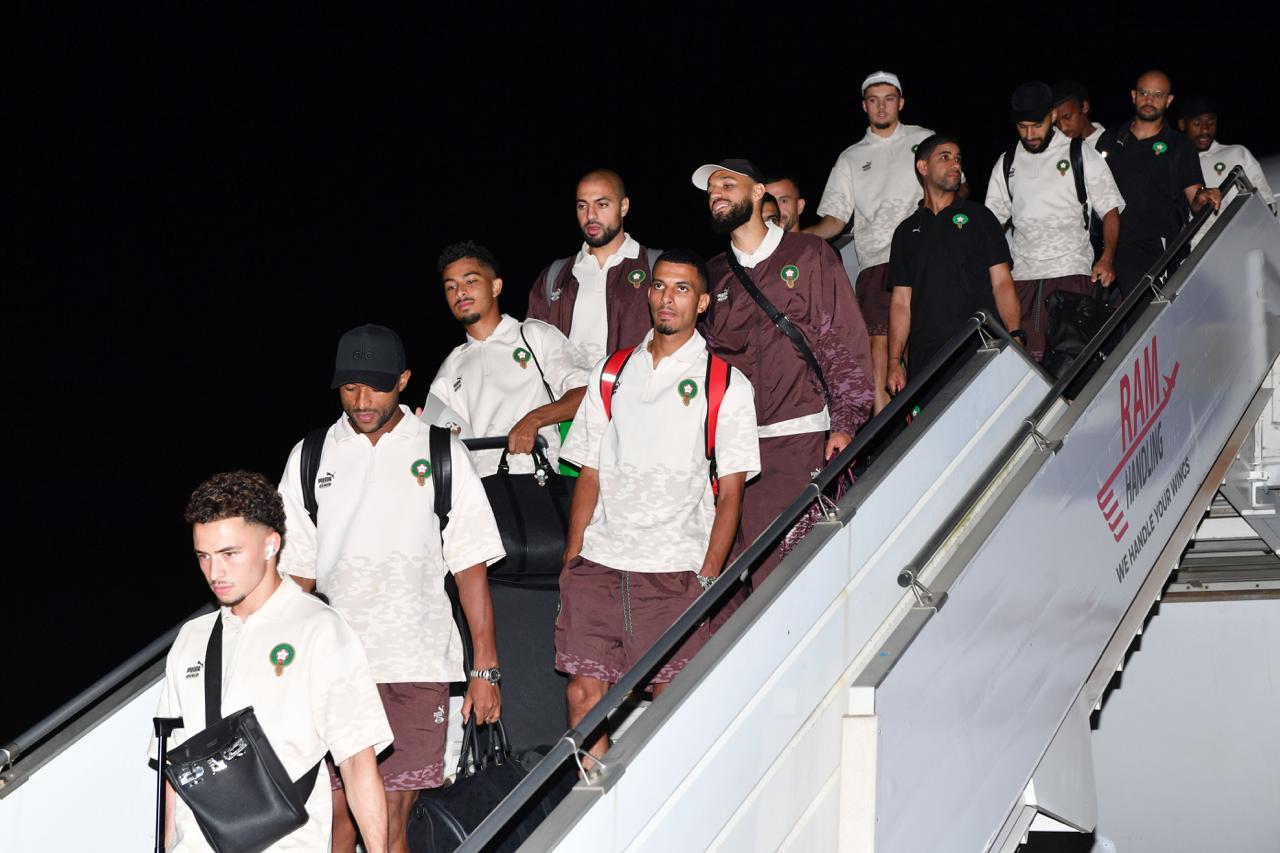
Morocco's remarkable run to the FIFA World Cup 2026 quarterfinals was not only a test of footballing quality but also one of endurance.
Throughout the tournament, the Atlas Lions reportedly traveled more than 9,000 kilometers, making them one of the most-traveled national teams at the World Cup as they journeyed across multiple host cities in the United States and Mexico.
A Demanding Travel Schedule
Morocco's campaign required frequent long-distance flights between host cities, adding another layer of complexity to an already demanding tournament schedule.
With limited recovery time between matches, the continuous travel presented additional logistical and physical challenges for both the players and the coaching staff.
A Journey Across North America
The Atlas Lions began their World Cup travels by moving from New Jersey to Boston, a journey of approximately 330 kilometers.
They then flew from Boston to Atlanta, covering roughly 1,500 kilometers, before embarking on an even longer trip to Monterrey, Mexico, a flight of around 1,900 kilometers during the knockout stage.
Morocco's Round of 16 preparations included another journey from Monterrey to Houston, spanning approximately 500 kilometers.
The team's final trip came ahead of the quarterfinal, when the Atlas Lions traveled from Houston back to Boston, a journey of nearly 2,500 kilometers before facing France.
More Than Just the Matches
Such extensive travel placed extra demands on Morocco's medical and technical staff, who were tasked with managing player recovery, training schedules, and physical preparation between matches.
Modern World Cups require teams to adapt not only tactically but also physically, with long flights, changing climates, and tight turnaround times becoming an increasingly important part of tournament football.
A Challenge Met With Resilience
Despite one of the competition's most demanding travel itineraries, Morocco continued to perform at a consistently high level throughout the tournament.
The Atlas Lions reached the World Cup quarterfinals for the second consecutive edition, once again demonstrating the resilience, professionalism, and unity that have become defining characteristics of this generation.
From thousands of kilometers in the air to unforgettable nights on the pitch, Morocco's 2026 World Cup journey showcased not only talent but also the endurance and determination required to compete among football's elite.