
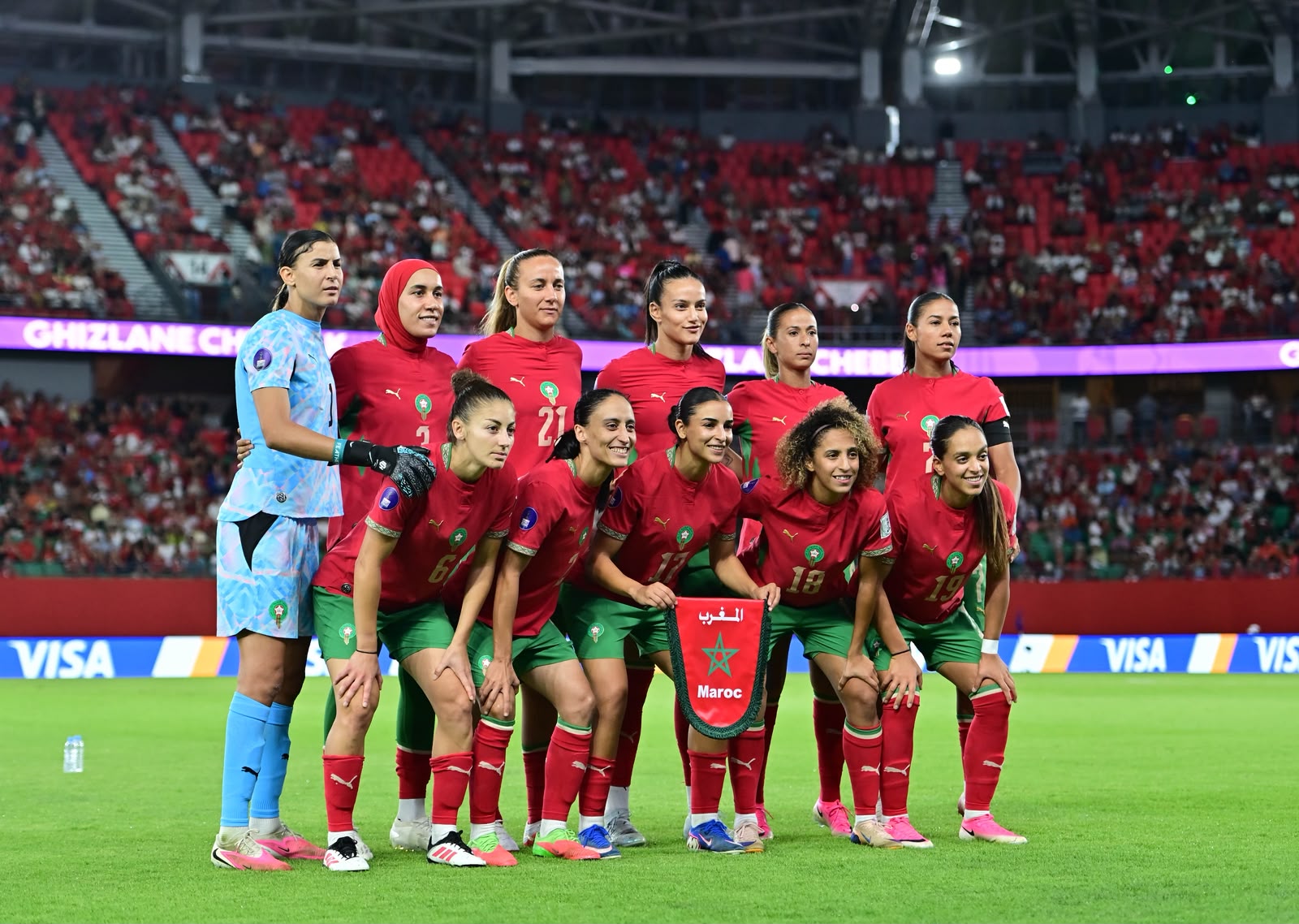
The dream of lifting the Women's Africa Cup of Nations trophy on home soil has come to an end. Morocco were eliminated by Cameroon in the semifinals after a goalless draw through 120 minutes,
with the Indomitable Lionesses ultimately prevailing in a dramatic penalty shootout. For the Atlas Lionesses, it was a heartbreaking conclusion to a tournament that had offered so much hope.
A Night Decided by the Finest Margins
Morocco controlled long stretches of the contest and created several promising moments, but Cameroon's defense remained determined and goalkeeper Michèle Bihina produced a remarkable performance.
The decisive moment arrived deep into extra time when Bihina denied Fatima Tagnaout from the penalty spot, keeping Cameroon alive and sending the match toward the shootout.
The Cameroonian goalkeeper then became the hero once again, making three saves during the
penalty series to send her team through to the final.
Morocco's Attacking Search
The Atlas Lionesses dominated possession and repeatedly pushed forward, but struggled to turn their territorial advantage into clear scoring opportunities.
Sanaa Mssoudy came closest early in the contest when her header struck the post, while Morocco continued to apply pressure through corners, wide attacks, and sustained possession.
Yet Cameroon's compact defensive structure remained difficult to break.
A Tournament Full of Promise
Despite the disappointment, Morocco's journey to the semifinals represented another significant chapter in the rapid rise of the Atlas Lionesses.
The hosts had already eliminated defending champions South Africa in the quarterfinals, while
Cameroon had previously sent Nigeria out of the competition.
With both of Africa's recent powerhouses removed, expectations surrounding Morocco grew even higher as the hosts emerged as one of the leading contenders for the trophy.
The semifinal ultimately demonstrated just how fine the margins can be in knockout football.
A Golden Generation Still Writing Its Story
For experienced figures such as Ghizlane Chebbak, Khadija Er-Rmichi, Ibtissam Jraidi, and Hanane Ait El Haj, the tournament carried particular emotional weight as they continued their pursuit of a first continental crown.
The disappointment will naturally hurt, but their contribution to Morocco's rise cannot be measured by one result.
They have helped transform the Atlas Lionesses into a team capable of competing deep into Africa's biggest tournament—and of inspiring an entire generation of Moroccan footballers.
Eyes Now Turn Toward 2027
The semifinal exit also brings a new chapter into focus.
With the 2027 FIFA Women's World Cup in Brazil approaching, Morocco now has an opportunity to use the lessons of this tournament as fuel for the next stage of its development.
For Jorge Vilda and the Moroccan football leadership, the coming months will provide an important opportunity to evaluate the campaign, strengthen the squad, and build on the qualities that brought the Atlas Lionesses this far.
The Dream Is Not Over
A trophy on home soil would have completed an extraordinary story. Instead, Morocco leaves WAFCON 2026 with another semifinal appearance and a painful reminder of how narrow the distance can be between heartbreak and glory.
The tears will eventually give way to determination.
The trophy may have slipped away in Rabat, but the Atlas Lionesses have already helped reshape the future of Moroccan women's football—and the next chapter is waiting to be written.