
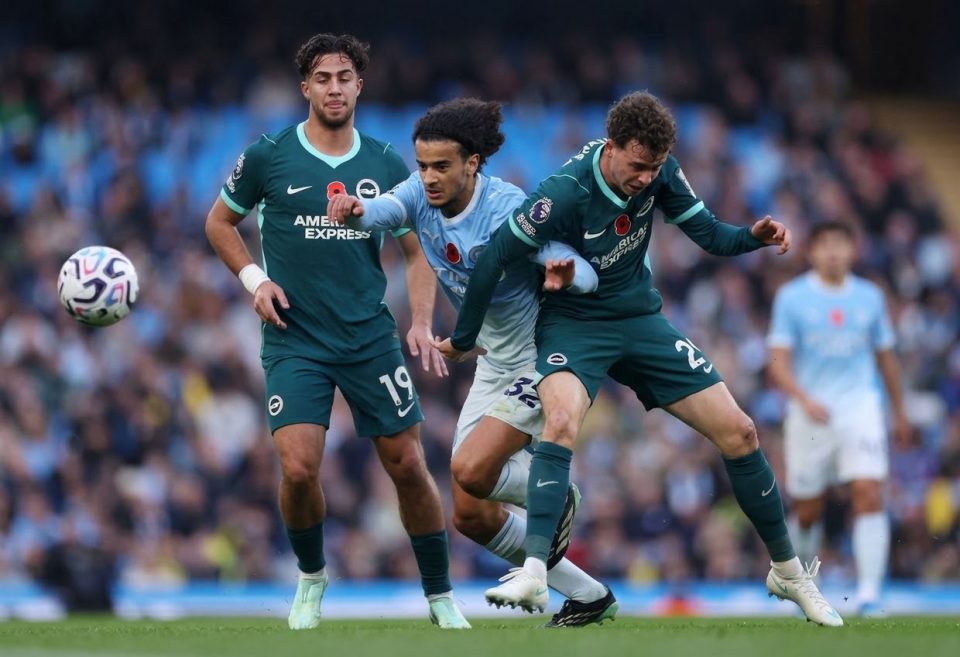
Ayyoub Bouaddi's tactical role has become a talking point following criticism from former Egyptian international and beIN SPORTS analyst Mohamed Aboutrika, who questioned Enzo Maresca's decision to deploy the Moroccan youngster outside his natural position.
Speaking during his analysis at half-time of the Manchester City versus Brighton encounter, Aboutrika argued that Bouaddi is best suited to operating as a number 6, rather than being pushed into more advanced midfield roles.
His comments have reignited the debate surrounding how the highly rated Moroccan talent should be utilised to maximise his technical qualities and overall influence on the pitch.
Aboutrika: “His Position Is Number 6”
Aboutrika did not hide his disagreement with the decision to use Bouaddi as either a number 8 or a number 10.
The Egyptian analyst used a striking comparison to explain his point, suggesting that deploying the youngster in those positions would be similar to playing Lionel Messi as a goalkeeper.
His argument was straightforward: Bouaddi's qualities are best suited to a deeper midfield role, where he can protect the defence, recover possession and help dictate the rhythm of the game.
Rather than asking the youngster to operate higher up the pitch, Aboutrika believes the coaching staff should allow him to develop in the position that naturally matches his abilities.
Why the Number 6 Role Matters
The defensive midfield position requires a specific combination of tactical awareness, composure and technical ability.
A player operating as a number 6 must be capable of reading opposition movements, winning possession, receiving the ball under pressure and initiating attacks from deeper areas.
These responsibilities can allow a technically gifted midfielder like Bouaddi to influence the game without necessarily being required to operate close to the opposition penalty area.
Aboutrika's argument is that changing the youngster's positioning could limit the qualities that make him particularly effective.
The number 8 and number 10 roles demand different movements, attacking responsibilities and positional habits. While versatility can be valuable, it does not always mean that every player should be deployed in multiple positions.
A Debate Over How to Maximise Bouaddi's Potential
The discussion highlights an important question surrounding the development of young midfielders: should coaches prioritise tactical flexibility or allow emerging talents to specialise in their strongest position?
For Bouaddi, finding the right balance could be particularly important as he continues developing at the highest level.
His technical qualities and ability to operate in midfield have made him one of the Moroccan talents attracting considerable attention. Ensuring that he plays in a system that maximises those strengths could be crucial to his long-term development.
Aboutrika's comments may not represent the only possible tactical interpretation, but they have certainly brought renewed attention to the question of how the Moroccan youngster should be used.
The Right Role Could Unlock Another Level
Modern football increasingly demands versatility from midfielders, but the best tactical decisions often come from understanding what each player does best.
For Bouaddi, the debate is not simply about wearing the number 6, 8 or 10 shirt. It is about identifying the position where his qualities can have the greatest impact on the team's performance.
Aboutrika has made his position clear: Bouaddi belongs at the base of midfield. Now, the challenge is finding the tactical system that allows the Moroccan talent to reach his full potential.