
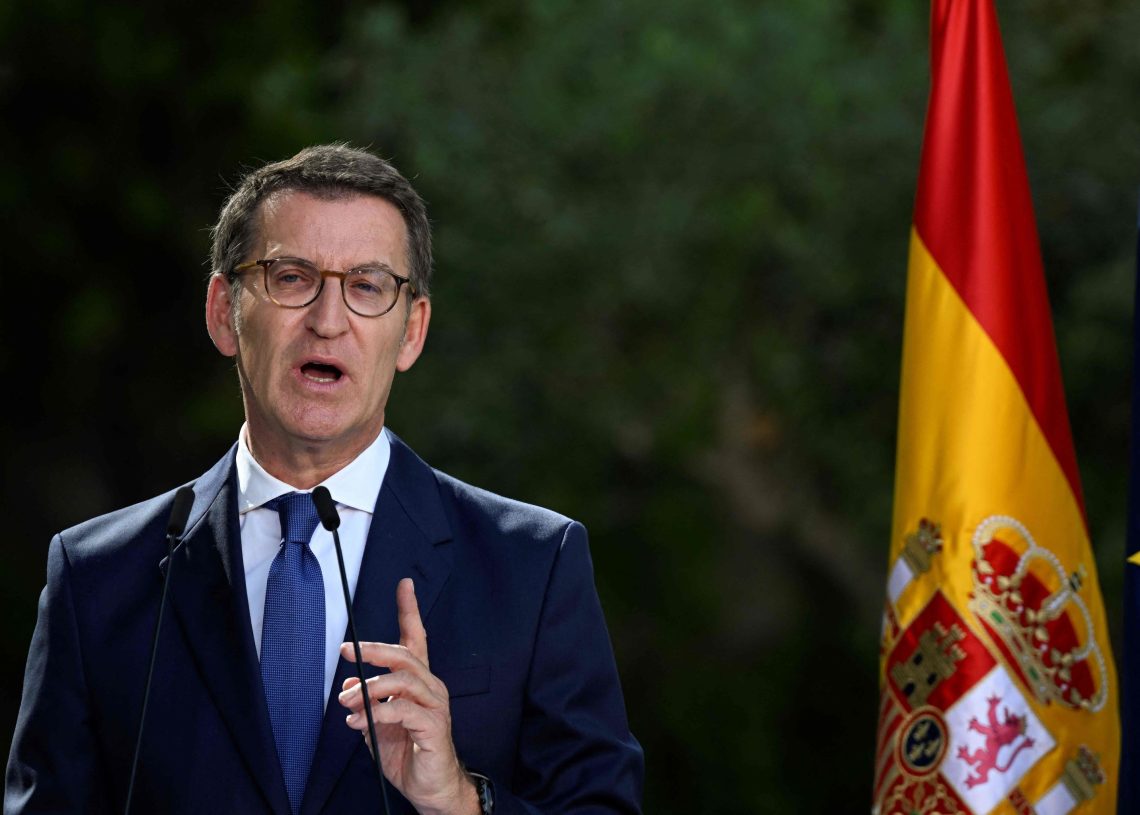
The race to host the 2030 FIFA World Cup final is becoming an increasingly prominent topic in Spain, with political and media figures openly expressing their preference for the tournament's most important match to take place on Spanish soil.
The latest intervention came from Alberto Núñez Feijóo, leader of Spain's People's Party (PP) and a candidate for the country's premiership. Speaking on the Spanish television programme El Chiringuito, he argued that Spain should host the final and questioned whether the country should remain involved in organising the tournament if the match were awarded to Morocco.
His comments have brought renewed attention to the competition between the proposed venues, particularly Morocco's ambitious Grand Stade Hassan II in Benslimane, which is being developed with a projected capacity of 115,000 spectators.
Feijóo Makes Spain's Position Clear
During his television appearance, Feijóo argued that Spain should be the natural host of the 2030 World Cup final.
His position was based on several arguments: Spain's experience in organising major sporting events, its established football infrastructure and its status as a former world champion.
He also referred to Morocco joining the original joint hosting project at a later stage.
The PP leader left little room for ambiguity when expressing his position:
- “Spain must organise the World Cup final. And if it does not organise it, then, in my opinion, it should not participate in organising the World Cup.”
The statement represents his personal and political position on the matter. It does not, however, establish where FIFA will ultimately decide to stage the final.
Morocco's Grand Stade Hassan II Adds Another Dimension
One of the main reasons the debate has attracted attention is Morocco's proposed Grand Stade Hassan II in Benslimane.
With a projected capacity of approximately 115,000 spectators, the future stadium is designed to become one of the largest football venues in the world.
The project represents a major part of Morocco's ambitions for the 2030 tournament and could become a candidate venue for the competition's biggest matches.
For Morocco, hosting the final would carry considerable sporting and organisational significance, placing the country at the centre of one of football's most important global events.
Spain, meanwhile, has several established stadiums that could also be considered, including Madrid's Santiago Bernabéu and Barcelona's Camp Nou.
El Chiringuito Debate Reflects Growing Spanish Interest
Feijóo's comments also prompted discussion on El Chiringuito, where journalist Juanma Rodríguez addressed the issue from the perspective of national pride and Spain's international image.
Rodríguez argued that hosting the final would represent an important opportunity for Spain and questioned whether the country should participate in a World Cup organised jointly with Morocco and Portugal if the decisive match were played outside Spanish territory.
His remarks reflected the intensity of the debate surrounding the final and the importance some Spanish commentators attach to hosting the tournament's defining fixture.
The discussion has consequently moved beyond stadium capacity and infrastructure, becoming a subject of wider national and sporting significance in Spain.
FIFA Will Make the Final Decision
Despite the strong positions expressed in political and media circles, the location of the 2030 World Cup final has not been decided by any of the three host countries.
FIFA will have the final say after evaluating the proposed venues, infrastructure, transport arrangements, accommodation, security and other organisational requirements.
Morocco, Spain and Portugal are jointly hosting the tournament, with the shared ambition of delivering a successful competition across three countries and two continents.
FIFA's inspection process is therefore central to determining which stadiums will host the various matches, including the final.
Political statements and public campaigns may influence the wider debate, but they do not replace the governing body's formal selection process.
The 2030 Final: A Major Question for All Three Hosts
The discussion surrounding the final illustrates how significant the 2030 World Cup has become for its three co-hosts.
For Spain, hosting the decisive match would reinforce its position as one of international football's leading event destinations. For Morocco, securing the final would represent a landmark achievement and another step in the country's expanding football ambitions. Portugal is also an integral partner in the joint hosting project.
Ultimately, the tournament's success will depend on cooperation between all three countries, regardless of which stadium receives the honour of hosting the final.
With Morocco's Grand Stade Hassan II emerging as an ambitious proposed venue and Spain openly making its case, the question of where the 2030 World Cup final will be played is set to remain one of the tournament's biggest talking points.